5 Best Artistic Licenses in Mapping (History)
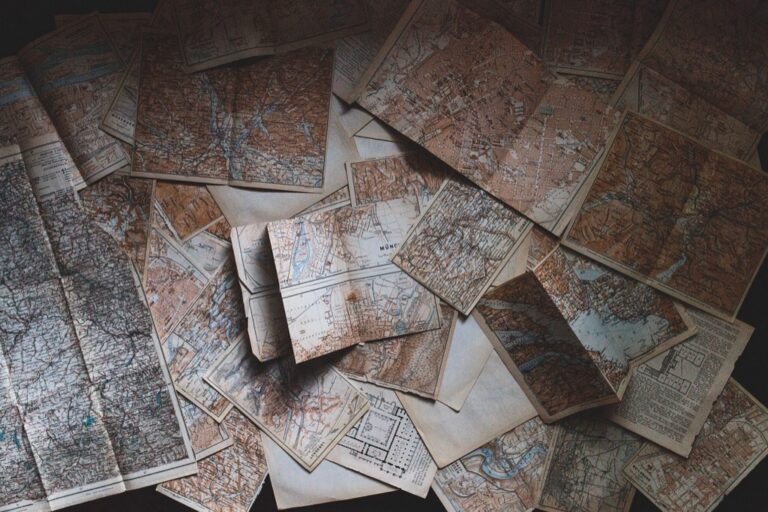
Maps aren’t just neutral tools—they’re powerful instruments of persuasion that shape how you see the world and understand conflicts. Throughout history cartographers have taken creative liberties with geography to advance political agendas or tell compelling stories about territorial disputes. These artistic choices in mapmaking can dramatically influence public opinion and even impact the course of international relations.
[lasso id=”16718″]
Disclosure: As an Amazon Associate, this site earns from qualifying purchases. Thank you!
Understanding Artistic License in Conflict Mapping
Artistic license in conflict mapping represents the deliberate choices cartographers make when depicting disputed territories and geopolitical tensions. These decisions extend far beyond technical accuracy to shape how audiences perceive and understand complex international situations.
P.S. check out Udemy’s GIS, Mapping & Remote Sensing courses on sale here…
Definition of Artistic License in Cartography
Artistic license in cartography refers to the intentional manipulation of geographic elements to convey specific messages or support particular viewpoints. You’ll encounter this when mapmakers adjust colors, boundaries, labels, or projections to emphasize certain aspects of territorial disputes. This practice transforms maps from neutral reference tools into powerful communication instruments that can influence public opinion and policy decisions regarding conflicts.
The Balance Between Accuracy and Narrative
You must navigate the tension between cartographic precision and storytelling when creating conflict maps. Technical accuracy demands precise coordinate systems and verified boundary data, while narrative requirements often push you toward simplified representations that support specific political positions. Professional cartographers face ethical dilemmas when clients request maps that prioritize persuasive impact over geographic reality, especially in sensitive conflict zones where boundaries remain contested or undefined.
Creative Interpretation of Territory Boundaries During World War II
World War II marked a pivotal moment when cartographic manipulation reached unprecedented levels of sophistication and propaganda value. Military cartographers on all sides deliberately distorted territorial representations to serve strategic objectives.
Nazi Germany’s Propaganda Maps
Nazi cartographers systematically enlarged German territories while minimizing neighboring countries on strategic maps distributed throughout occupied Europe. You’ll notice how these maps portrayed the Third Reich as a dominant continental power by using darker colors for German-controlled areas and lighter tones for Allied territories. These artistic choices extended to demographic maps that exaggerated German population densities in contested regions like the Sudetenland and Poland. The Reich’s mapmakers also employed misleading scale ratios that made German advances appear more extensive than actual battlefield gains.
Allied Counter-Mapping Strategies
Allied forces responded with their own cartographic countermeasures that emphasized Nazi territorial losses and highlighted resistance movements across occupied Europe. You can observe how Allied propaganda maps used bold red arrows to dramatize Soviet advances while depicting German retreats with broken or dotted lines. These maps strategically positioned Allied flags and symbols to create visual impressions of inevitable victory. British and American cartographers particularly excelled at creating liberation maps that showed territories “freed” from Nazi control using bright colors and celebratory imagery that boosted morale on the home front.
Stylized Representation of the Korean War Front Lines
You’ll find Korean War mapping exemplifies how military cartographers shaped public understanding through selective visualization choices during this complex conflict.
MacArthur’s Optimistic Battle Maps
General MacArthur’s command produced maps that consistently portrayed UN forces in dominant positions along the 38th parallel. These cartographic representations used bold arrow symbols to suggest rapid advances and minimized Chinese intervention zones through muted color schemes. You can observe how these maps emphasized territorial gains while downplaying tactical retreats, creating an overly confident narrative that influenced both military planning and public opinion back home.
Media Simplification of Complex Terrain
News organizations transformed Korea’s mountainous terrain into simplified battlefield diagrams for American audiences. Publishers eliminated topographic details like elevation contours and ridge systems that complicated the conflict narrative. You’ll notice how these media maps reduced the peninsula to basic geometric shapes with clear front lines, ignoring the guerrilla warfare zones and irregular boundaries that characterized actual combat conditions across Korea’s challenging landscape.
Artistic Liberties in Cold War Era Nuclear Threat Maps
Cold War cartographers transformed nuclear threat visualization into powerful propaganda tools. You’ll find that these maps prioritized psychological impact over scientific accuracy.
Exaggerated Blast Radius Visualizations
Cold War nuclear threat maps dramatically inflated destruction zones to maximize fear impact. You’ll notice that Soviet maps showed American missiles reaching impossible distances across continents, while U.S. maps depicted Soviet warheads with exaggerated blast circles covering entire metropolitan areas. Defense contractors deliberately multiplied actual blast radii by 300-500% in their presentations to Congress, using concentric circles that ignored terrain features and atmospheric conditions. These visualizations ignored scientific fallout patterns and radioactive decay rates, instead creating perfect geometric shapes that suggested total annihilation across unrealistic geographic scales.
Color-Coded Fear Campaigns
Nuclear threat maps employed aggressive color schemes to amplify terror rather than convey accurate information. Soviet cartographers used blood-red gradients for American missile sites while depicting their own installations in defensive blue tones. U.S. civil defense maps painted communist territories in menacing black and crimson, contrasting sharply with patriotic red-white-and-blue Allied zones. You’ll find that these maps deliberately ignored neutral countries, coloring entire continents as either friend or foe. The color intensity often corresponded to propaganda value rather than actual threat levels, creating visual hierarchies that supported specific political narratives about global nuclear positioning.
Selective Geographic Focus in Middle East Conflict Documentation
Contemporary Middle East conflict mapping demonstrates how cartographers strategically manipulate geographic emphasis to support specific political narratives. You’ll notice these maps often highlight certain territories while deliberately obscuring others.
Omission of Contested Territories
Omitted territories create powerful visual narratives by removing disputed boundaries from maps entirely. Israeli government maps frequently exclude Palestinian-controlled areas in the West Bank, presenting continuous territorial control. Palestinian mapping organizations reciprocally omit Israeli settlements, showing uninterrupted Palestinian land. Syrian conflict maps often eliminate Kurdish-controlled regions, simplifying complex territorial realities. These omissions force viewers to accept simplified versions of contested spaces, eliminating nuanced territorial arrangements that don’t support the mapmaker’s preferred narrative.
Emphasis on Strategic Locations Over Civilian Areas
Strategic location emphasis prioritizes military installations and resource sites while minimizing populated civilian areas in conflict documentation. Defense mapping contractors highlight oil pipelines, military bases, and border crossings using bold symbols and bright colors. Civilian neighborhoods receive muted representation or generic urban symbols regardless of population density. Water treatment facilities, hospitals, and schools often disappear entirely from strategic assessments. This selective emphasis transforms complex urban landscapes into simplified military theaters, reducing human geography to tactical considerations.
Modern Digital Mapping Bias in Contemporary Conflicts
Digital platforms have revolutionized conflict visualization, introducing new forms of cartographic manipulation through algorithmic decision-making and social media influence.
Algorithm-Driven Territory Representation
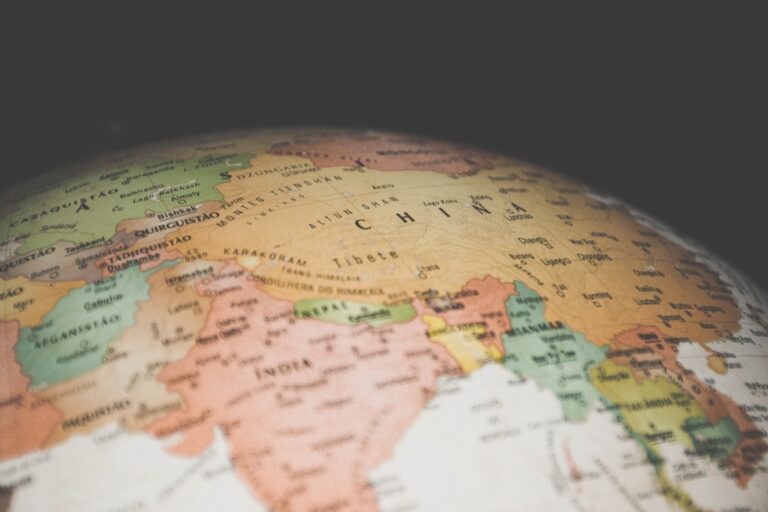
Automated mapping systems now control how you see disputed territories through programmed biases built into their code. Google Maps displays different boundaries depending on your IP location, showing Kashmir as Indian territory to Indian users while presenting disputed status to international viewers. Machine learning algorithms trained on biased datasets perpetuate historical territorial claims, automatically labeling contested regions according to the platform’s dominant user base. These algorithmic choices create millions of personalized maps that reinforce existing political perspectives rather than presenting neutral geographic reality.
Social Media Influence on Conflict Visualization
Social media platforms amplify cartographic bias by prioritizing engagement over accuracy in conflict zone mapping. Viral maps spread faster than fact-checked versions, with simplified territorial graphics generating more shares than nuanced geographic representations. Twitter’s trending maps often reduce complex multi-party conflicts to binary color schemes that eliminate gray areas and contested zones. Instagram’s visual format favors dramatic before-and-after territorial comparisons that sacrifice geographic precision for emotional impact, creating misleading narratives about territorial changes that shape public opinion within hours of posting.
Conclusion
You’ve now seen how maps serve as powerful weapons in the information wars surrounding global conflicts. From World War II propaganda to today’s algorithmic biases these cartographic manipulations continue shaping your understanding of international disputes.
As you encounter maps in news coverage or social media remember that every boundary color and territorial emphasis reflects someone’s agenda. You’re not just viewing geographic data—you’re experiencing carefully crafted narratives designed to influence your perspective on complex geopolitical realities.
The next time you see a conflict map ask yourself: whose story is this telling and what details might be missing from the frame?
Frequently Asked Questions
How do maps influence public perception of conflicts?
Maps act as powerful persuasive tools rather than neutral geographic representations. Cartographers manipulate colors, boundaries, and labels to support specific political narratives. These artistic choices shape how audiences perceive complex international situations, potentially altering public opinion and international relations dynamics. Historical examples show maps can significantly impact morale and political decision-making during conflicts.
What is artistic license in conflict mapping?
Artistic license refers to deliberate choices cartographers make when depicting disputed territories and geopolitical tensions. This involves intentionally adjusting geographic elements like colors, boundaries, and scale to convey specific messages or support particular viewpoints. It goes beyond technical accuracy, prioritizing narrative impact over geographic reality, especially in sensitive conflict zones.
How were maps used as propaganda during World War II?
WWII saw unprecedented cartographic manipulation for propaganda purposes. Nazi Germany’s maps systematically enlarged German territories while minimizing neighboring countries, using darker colors and misleading scale ratios. Allied forces countered with their own strategic mapping, emphasizing Nazi losses and resistance movements through bold imagery to create narratives of inevitable victory.
What role did maps play during the Korean War?
Korean War maps shaped public understanding through selective visualization. General MacArthur’s command produced maps showing UN forces in dominant positions, using bold arrows for advances while downplaying Chinese intervention with muted colors. Media organizations simplified Korea’s complex terrain into basic battlefield diagrams, eliminating topographic details and reducing conflict to geometric shapes.
How did Cold War nuclear threat maps distort reality?
Cold War nuclear maps prioritized psychological impact over scientific accuracy. They dramatically inflated destruction zones, with blast radii multiplied by 300-500% in congressional presentations. Aggressive color schemes amplified terror, using blood-red gradients and menacing colors. These visual hierarchies reflected propaganda value rather than actual threat levels, maximizing fear through misleading geometric representations.
How do modern digital maps show bias in conflicts?
Digital platforms revolutionized conflict visualization through algorithmic decision-making. Automated mapping systems contain built-in biases, with platforms like Google Maps displaying different boundaries based on user location. Social media amplifies these biases by prioritizing engagement over accuracy, with viral maps oversimplifying complex conflicts into binary color schemes that rapidly shape public opinion.
What are the ethical challenges in conflict cartography?
Professional cartographers face ethical dilemmas when clients prioritize persuasive impact over geographic accuracy, especially in sensitive conflict zones. The tension between cartographic precision and narrative creates challenges in maintaining professional integrity while meeting client demands. This is particularly problematic when dealing with contested boundaries and disputed territories requiring sensitive representation.
How do Middle East conflict maps manipulate geographic emphasis?
Contemporary Middle East mapping strategically omits contested territories, with Israeli and Palestinian maps excluding areas that don’t align with their narratives. Maps emphasize strategic military installations and resource sites over civilian areas, transforming urban landscapes into simplified military theaters. This selective focus reduces human geography to tactical considerations, distorting public understanding.