7 Best Urban Landscape Art Styles
Urban landscapes offer endless inspiration for artists looking to capture the energy and complexity of city life. Whether you’re drawn to towering skyscrapers or bustling street corners you’ll find that different artistic styles can dramatically transform how viewers experience your cityscape artwork.
From photorealistic detail to bold abstract interpretations each approach brings unique strengths to urban art. The right style choice can help you emphasize everything from architectural grandeur to human stories unfolding in metropolitan settings.
Why it matters: Mastering multiple artistic styles expands your creative toolkit and helps you connect with diverse audiences who respond to different visual languages.
Disclosure: As an Amazon Associate, this site earns from qualifying purchases. Thank you!
P.S. check out Udemy’s GIS, Mapping & Remote Sensing courses on sale here…
Impressionistic Urban Landscapes: Capturing the Energy of City Life
Impressionistic techniques transform static city views into vibrant celebrations of urban energy. You’ll discover how loose brushwork and atmospheric effects create movement that mirrors the constant pulse of metropolitan life.
Using Light and Color to Convey Urban Atmosphere
Light becomes your primary tool for capturing the city’s emotional temperature through impressionistic urban landscapes. You’ll use warm oranges and yellows to depict bustling morning commutes while cool blues and purples convey the quieter evening hours. Broken color techniques allow you to layer complementary hues that vibrate optically creating the shimmering quality of heat rising from pavement or the soft glow of streetlights through fog. You’ll apply paint in separate strokes rather than blending letting the viewer’s eye mix colors naturally.
Quick Brushstrokes for Dynamic Street Scenes
Quick gestural marks capture the constant movement that defines urban environments in impressionistic street scenes. You’ll use horizontal strokes to suggest speeding traffic while vertical dashes indicate pedestrians walking briskly along sidewalks. Short choppy brushwork conveys the fragmented nature of city life where countless individual stories intersect momentarily. You’ll vary your brush pressure and direction to create rhythm that mimics the start-stop flow of traffic lights construction sounds and crowd movements that pulse through metropolitan areas.
Famous Impressionist Cityscapes and Their Techniques
Gustave Caillebotte’s “Paris Street; Rainy Day” demonstrates how impressionists used reflective surfaces to multiply urban energy through doubled imagery. You’ll study how Caillebotte employed precise perspective combined with loose atmospheric effects to balance architectural structure with emotional mood. Childe Hassam’s flag series shows how repeated motifs like banners create visual rhythm across canvas surfaces. You’ll notice how these masters used broken brushwork in backgrounds while maintaining sharper focus on key compositional elements creating depth that draws viewers into bustling city scenes.
Realistic Urban Landscapes: Precise Detail in Metropolitan Settings
Realistic urban landscapes capture the authentic character of city environments through meticulous attention to architectural details and street-level observations. This approach requires mastering photographic accuracy while maintaining artistic vision.
Photorealistic Techniques for Architectural Accuracy
Photorealistic rendering demands precise measurement and observation of building proportions, surface textures, and structural elements. You’ll need to study how light interacts with glass facades, concrete surfaces, and metal fixtures throughout different times of day. Grid-based drawing methods help maintain accurate perspective when depicting complex intersections and multi-story buildings. Focus on capturing specific architectural details like window frames, signage placement, and material weathering patterns that give each urban structure its unique character and authenticity.
Capturing Everyday Urban Life with Clarity
Realistic urban scenes showcase the authentic human element through careful observation of pedestrian movement, vehicle traffic, and street activities. You’ll achieve clarity by positioning figures naturally within the architectural environment, ensuring proper scale relationships between people and buildings. Document specific details like clothing styles, street furniture, and seasonal elements that reflect the particular time and place. Pay attention to how shadows fall across sidewalks and how people interact with their urban surroundings to create believable narrative moments.
Tools and Methods for Realistic City Rendering
Professional-grade pencils ranging from 2H to 6B provide the tonal range necessary for depicting urban textures and shadows effectively. You’ll benefit from using blending stumps for smooth gradations on building surfaces and fine-tip pens for precise architectural details. Reference photography serves as your foundation, but combine multiple images to avoid copyright issues and create original compositions. Establish a consistent light source early in your process, and use rulers or perspective grids to maintain accurate proportions throughout complex cityscapes.
[lasso id=”16444″]
Abstract Urban Landscapes: Deconstructing the Urban Experience
Abstract urban art breaks away from realistic representation to explore the emotional and conceptual essence of city life. This style transforms recognizable architectural elements into expressive visual statements that capture the urban experience beyond mere documentation.
Geometric Interpretations of City Structures
Abstract artists simplify complex cityscapes into bold geometric forms, reducing skyscrapers to angular shapes and intersections to interlocking planes. You’ll notice how Mondrian’s “Broadway Boogie Woogie” transforms New York’s grid system into rhythmic rectangles and lines. This approach emphasizes the mathematical beauty of urban planning while highlighting the repetitive patterns that define modern cities. Geometric abstraction helps you understand how buildings relate to each other spatially, creating compositions that reveal the underlying structure of urban environments.
Color and Form Over Literal Representation
Color becomes the primary vehicle for conveying urban energy when you abandon realistic hues for expressive palettes. Abstract urban artists use vibrant oranges to represent the heat of busy streets or deep blues to capture the isolation within crowded spaces. Form follows emotional intent rather than architectural accuracy, allowing you to stretch and distort building shapes to emphasize their psychological impact. This approach transforms familiar cityscapes into powerful visual metaphors that communicate the feeling of urban life rather than its literal appearance.
Emotional Expression Through Abstract Urban Art
Abstract urban landscapes excel at conveying the psychological experience of city living through non-representational elements. You can express the overwhelming nature of urban density through chaotic brushstrokes or the loneliness of city life through isolated forms floating in vast spaces. Artists like Franz Kline captured the raw energy of urban construction through bold black strokes that suggest both destruction and creation. This emotional abstraction allows viewers to connect with universal urban experiences while encouraging personal interpretation of the cityscape’s deeper meaning.
Pop Art Urban Landscapes: Bold Colors and Commercial Culture
Pop art transforms urban landscapes into vibrant celebrations of commercial culture and mass media imagery. This style embraces the visual chaos of city advertising and signage as artistic elements rather than urban clutter.
Incorporating Urban Icons and Signage
Pop art urban landscapes feature prominent billboards, neon signs, and storefront displays as central compositional elements. You’ll notice artists like David Hockney incorporating swimming pools, gas stations, and fast-food restaurants into their cityscapes. Commercial typography becomes decorative art through bold lettering and brand logos integrated into building facades. Street signs, traffic lights, and subway maps transform into graphic design elements that define the urban visual vocabulary.
Vibrant Color Palettes for City Energy
Electric blues, hot pinks, and fluorescent yellows dominate pop art cityscapes to mirror commercial advertising aesthetics. You’ll use saturated primary colors that never appear naturally in traditional landscape painting but reflect artificial urban lighting. Neon purples and lime greens capture the energy of 24-hour diners and late-night entertainment districts. High-contrast color combinations like orange and turquoise create visual tension that matches the sensory overload of metropolitan environments.
Street Art Influences on Pop Urban Landscapes
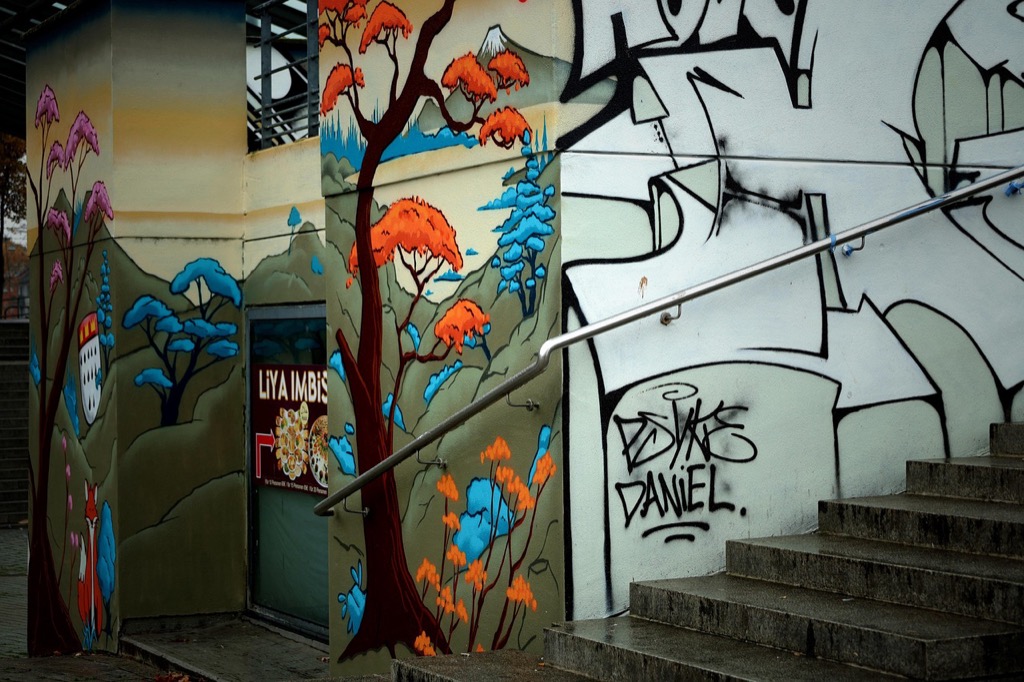
Graffiti techniques blend seamlessly with pop art urban scenes through spray-paint textures and bold graphic elements. You’ll incorporate stencil-style imagery and tag-inspired lettering that originated from authentic street culture. Wheat-paste poster aesthetics influence how pop artists layer multiple images within single compositions. Screen-printing methods borrowed from Andy Warhol create repetitive architectural patterns that echo mass production and urban uniformity throughout commercial districts.
Noir Urban Landscapes: Dark and Dramatic City Scenes
Noir urban landscapes capture the mysterious and brooding atmosphere of city life through dramatic contrasts and shadowy compositions. This artistic approach transforms ordinary street scenes into compelling narratives of urban mystery and emotional depth.
Using Shadow and Contrast for Mood
Shadow dominates noir urban compositions, creating dramatic focal points that guide your viewer’s attention through the cityscape. You’ll achieve maximum impact by placing bright light sources against deep shadows, such as a lone streetlight cutting through dark alleyways or illuminated windows piercing building facades. Strong contrasts between light and dark areas establish tension and mystery within your urban scenes. Position shadows strategically to obscure certain architectural details while highlighting others, creating an atmosphere of intrigue that invites viewers to explore the hidden stories within your cityscape.
Monochromatic Approaches to Urban Drama
Monochromatic palettes amplify the emotional intensity of noir urban landscapes by eliminating color distractions and focusing attention on form and mood. You’ll find that working with grayscale or single-color schemes like deep blues or warm sepias enhances the dramatic quality of city scenes. Black and white compositions particularly excel at emphasizing architectural textures, from rough brick walls to smooth glass surfaces. Limited color palettes force you to rely on value relationships and contrast to create depth, resulting in more powerful visual statements that capture the essence of urban noir aesthetics.
Film Noir Influences on Contemporary Urban Art
Film noir cinematography provides a rich foundation for contemporary urban landscape art, offering proven techniques for creating atmospheric city scenes. You can adapt classic noir elements like venetian blind shadows, rain-slicked streets, and dramatic uplighting to enhance your urban compositions. Contemporary artists often reference iconic noir films by incorporating tilted perspectives, extreme close-ups of architectural details, and strategic use of fog or mist. These cinematic influences help you create urban landscapes that feel both timeless and modern, connecting your work to the broader cultural tradition of noir storytelling through visual atmosphere.
[lasso id=”16024″]
Minimalist Urban Landscapes: Simplified City Compositions
Minimalist urban landscapes strip away unnecessary details to reveal the essential geometric beauty of city architecture. This approach transforms complex cityscapes into powerful visual statements through strategic reduction and careful composition.
Clean Lines and Reduced Elements
Clean lines form the foundation of minimalist urban art by eliminating decorative details and focusing on structural essentials. You’ll achieve maximum impact by reducing buildings to their basic geometric shapes – rectangles, triangles, and circles that define urban architecture. Remove visual clutter like signage, street furniture, and excessive architectural ornamentation to create compositions that breathe. Focus on one or two dominant structures rather than depicting entire city blocks. This selective approach allows viewers to appreciate the mathematical precision of urban design without distraction.
Negative Space in Urban Design
Negative space becomes equally important as the buildings themselves in minimalist urban compositions. You’ll create dramatic tension by balancing empty sky areas against solid architectural forms. Large expanses of white or neutral space around buildings emphasize their sculptural qualities and create visual breathing room. Strategic placement of negative space guides the viewer’s eye through your composition naturally. Consider how empty areas between buildings create rhythmic patterns that reflect the planned nature of urban environments.
Modern Architecture as Minimalist Inspiration
Modern architecture provides perfect subject matter for minimalist urban landscapes through its emphasis on function and form. You’ll find inspiration in glass curtain walls, concrete facades, and steel frame structures that already embody minimalist principles. Buildings like the Seagram Building or contemporary skyscrapers offer clean geometries that translate beautifully into simplified compositions. Focus on how light interacts with smooth surfaces and sharp edges to create natural contrasts. These architectural elements eliminate the need for artistic interpretation since they’re already designed with minimalist aesthetics in mind.
Expressionist Urban Landscapes: Emotional Intensity in City Art
Expressionist urban landscapes transform the city into a psychological battlefield where architecture becomes a vessel for raw human emotion. This powerful artistic approach prioritizes feeling over faithful representation, creating cityscapes that pulse with inner turmoil and existential intensity.
Distorted Perspectives for Psychological Impact
Expressionist artists deliberately warp architectural forms to mirror the psychological state of urban dwellers. Buildings lean and twist at impossible angles, creating visual tension that reflects the stress of city living. Streets stretch endlessly toward vanishing points, emphasizing isolation and disconnection. Skyscrapers tower menacingly overhead with exaggerated heights that dwarf human figures below. These distortions transform familiar urban spaces into emotionally charged environments that speak directly to viewers’ subconscious fears and anxieties about modern life.
Bold Brushwork and Intense Colors
Expressionist urban art employs aggressive brushstrokes and jarring color palettes to convey emotional intensity. Thick, visible paint application creates texture that adds physical weight to psychological themes. Acidic yellows clash with deep purples to represent urban discord and tension. Fiery reds dominate evening cityscapes, suggesting underlying anger or passion within the urban environment. Artists like Ernst Ludwig Kirchner used bold, non-naturalistic colors to transform mundane street scenes into emotionally charged compositions that prioritize psychological truth over visual accuracy.
Conveying Urban Alienation and Energy
Expressionist cityscapes excel at capturing the paradox of urban existence—simultaneous energy and isolation. Crowds of faceless figures move through distorted streets, emphasizing anonymity within the bustling metropolis. Harsh lighting creates dramatic shadows that fragment architectural forms, reflecting the fragmented nature of modern urban experience. Electric colors and dynamic compositions convey the frenetic pace of city life while elongated forms and empty spaces suggest the loneliness that often accompanies urban living. This style transforms everyday city scenes into powerful statements about human condition.
Conclusion
Your journey through these seven artistic styles opens up endless possibilities for capturing urban landscapes in compelling ways. Each approach offers unique tools to express your vision of city life whether you’re drawn to the raw emotion of expressionism or the clean simplicity of minimalism.
The key to mastering urban landscape art lies in experimenting with different techniques until you find what resonates with your creative voice. You’ll discover that combining elements from various styles can create even more powerful and personal interpretations of the urban environment.
Start with the style that speaks to you most then gradually explore others to expand your artistic vocabulary. Your urban landscapes will become more dynamic and engaging as you develop confidence across multiple approaches.
Frequently Asked Questions
What artistic styles work best for urban landscape paintings?
Several styles effectively capture city life, including photorealism for precise architectural detail, impressionism for dynamic energy through light and color, abstract art for emotional essence, pop art for commercial culture celebration, noir for mysterious atmosphere, minimalism for geometric beauty, and expressionism for psychological intensity. Each style offers unique advantages for depicting different aspects of urban environments.
How do impressionist techniques enhance urban artwork?
Impressionist techniques transform static cityscapes into dynamic representations by using light and color to convey emotional atmosphere. Artists employ warm hues for bustling scenes and cool tones for quieter moments. Quick brushstrokes capture constant urban movement, while varied techniques reflect the city’s rhythm, creating vibrant portrayals of urban energy.
What tools are essential for realistic urban landscape rendering?
Essential tools include professional-grade pencils for precise detail work, blending stumps for smooth transitions, and high-quality reference photography. Artists should focus on accurate proportions, meticulous observation of architectural elements, light interplay on surfaces, and natural figure positioning to authentically capture the character of urban environments.
How does abstract art interpret urban landscapes differently?
Abstract urban art breaks from realistic representation to explore emotional and conceptual city essence. Artists simplify complex cityscapes into bold geometric forms, use expressive color palettes over realistic hues, and focus on psychological impact rather than literal depiction, allowing viewers personal interpretation of universal urban experiences.
What defines pop art urban landscapes?
Pop art urban landscapes celebrate commercial culture and mass media imagery through vibrant colors and bold compositions. They incorporate billboards, neon signs, storefront displays, and street art elements like graffiti techniques. Electric blues, fluorescent yellows, and commercial advertising aesthetics capture the dynamic energy of contemporary city environments.
How do noir techniques create atmospheric urban scenes?
Noir techniques use dramatic contrasts between bright light sources and deep shadows to create mysterious, brooding atmospheres. Monochromatic approaches amplify emotional intensity by focusing on form and mood without color distractions. These elements, influenced by film noir, enhance urban compositions through powerful visual storytelling.
What makes minimalist urban landscapes effective?
Minimalist urban landscapes strip away unnecessary details to reveal essential geometric beauty in city architecture. They use clean lines, reduced elements, and strategic negative space to create powerful visual statements. Modern architecture’s emphasis on function and form provides perfect subjects for these compositions, enhanced by light interaction.
How does expressionist style transform urban scenes?
Expressionist urban art transforms cities into psychological battlefields where architecture becomes a vessel for raw human emotion. Artists deliberately warp architectural forms, use bold brushwork and intense colors to convey emotional intensity, and capture the paradox of urban existence—simultaneous energy and isolation—in powerful emotional statements.