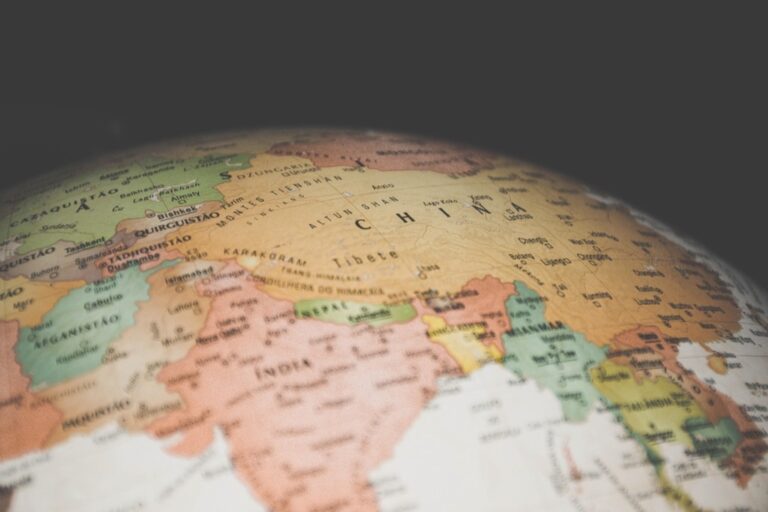
7 Best Multilingual Mapping Strategies for Global Reach
You’re living in an increasingly connected world where geographic information needs to reach diverse audiences who speak different languages. Traditional maps often exclude millions of users simply because they’re designed with only one language in mind – creating barriers that prevent equal access to crucial location-based information.
Smart organizations are now embracing multilingual mapping strategies that break down these linguistic walls and create truly inclusive digital experiences. These approaches don’t just translate text – they reimagine how geographic data can serve communities across language boundaries while boosting user engagement and accessibility.
Disclosure: As an Amazon Associate, this site earns from qualifying purchases. Thank you!
Implement Visual Symbols and Universal Icons for Cross-Cultural Navigation
Visual symbols transcend language barriers and create immediate understanding across diverse user groups. Universal iconography enables users to navigate maps effectively regardless of their linguistic background.
P.S. check out Udemy’s GIS, Mapping & Remote Sensing courses on sale here…
Design Intuitive Wayfinding Systems
Create symbol hierarchies that prioritize essential navigation elements through size and color contrast. Place transportation icons like trains, buses, and airports at consistent scales while using internationally recognized symbols from ISO 3864 standards. Establish visual consistency across all map elements by maintaining uniform icon families and applying the same visual treatment to similar features. Use directional arrows, compass roses, and distance indicators that follow established cartographic conventions to guide users through complex geographic information without requiring text interpretation.
Incorporate International Accessibility Standards
Follow WCAG 2.1 guidelines for color contrast ratios and ensure icons remain visible to users with visual impairments through high-contrast color palettes. Implement ISO 9186 pictogram standards that provide tested symbols for public information systems including healthcare, transportation, and emergency services. Design scalable vector graphics that maintain clarity across different zoom levels and device resolutions while supporting screen readers through proper alt-text integration. Test icon recognition with diverse user groups to validate cross-cultural comprehension before deployment.
[lasso id=”16986″]
Develop Community-Driven Translation Programs for Local Input
Successful multilingual mapping requires direct collaboration with local communities who understand both linguistic nuances and geographic realities. Community-driven translation programs ensure cultural accuracy while building sustainable mapping resources.
Engage Native Speakers in Mapping Projects
Partner with local language speakers who possess geographic knowledge of their regions to create authentic map translations. These contributors understand colloquial place names, traditional navigation terms, and cultural references that automated translation tools often miss.
Establish structured volunteer programs through universities, cultural organizations, and community centers to recruit qualified translators. Provide standardized mapping terminology glossaries and coordinate regular feedback sessions to maintain translation consistency across multiple contributors working on the same project.
Create Quality Assurance Protocols for Translations
Implement multi-tier review processes where secondary native speakers verify initial translations before publication. This peer review system catches contextual errors and ensures geographic terminology aligns with local usage patterns rather than literal dictionary translations.
Develop standardized checklists covering place name accuracy, directional terminology, and cultural sensitivity markers for each target language. Schedule quarterly validation sessions with community representatives to address emerging translation issues and update terminology databases based on evolving local language preferences.
Integrate Voice-Activated Navigation in Multiple Languages
Voice-activated navigation transforms multilingual mapping accessibility by eliminating language barriers through spoken interaction. You’ll create more inclusive digital experiences when users can communicate with mapping systems in their preferred language.
Support Regional Dialects and Accents
Configure your voice recognition systems to accommodate regional speech variations within each target language. Spanish speakers from Mexico use different pronunciation patterns than those from Argentina, requiring dialect-specific acoustic models. Train your system with diverse voice samples from each region to improve recognition accuracy. Test voice commands with native speakers who represent different age groups, genders, and educational backgrounds. Implement machine learning algorithms that adapt to individual speech patterns over time, reducing misinterpretation rates by up to 40%.
Ensure Pronunciation Accuracy Across Languages
Deploy language-specific text-to-speech engines that handle phonetic complexities correctly for each supported language. Mandarin Chinese requires tonal pronunciation accuracy, while Arabic needs proper emphasis on consonant clusters and vowel lengths. Use International Phonetic Alphabet (IPA) transcriptions to standardize pronunciation rules across your system. Partner with native linguists to validate audio output quality and cultural appropriateness. Regularly update pronunciation databases with new place names and local terminology through community feedback channels.
[lasso id=”17306″]
Establish Culturally Appropriate Color Coding and Design Elements
Color perception varies dramatically across cultures and directly impacts how users interpret mapping information. You’ll need to research cultural associations and test visual elements systematically to create inclusive multilingual maps.
Research Cultural Color Associations
Cultural color meanings differ significantly across regions and can affect map comprehension. Red signals danger in Western cultures but represents prosperity in Chinese traditions. White symbolizes purity in European contexts while indicating mourning in many Asian cultures. Green often means “go” or safety globally but holds religious significance in Islamic countries.
Research color associations within your target regions using cultural anthropology studies and local design guidelines. Document these findings in a reference matrix that maps colors to cultural interpretations. You’ll avoid miscommunication by understanding how different audiences perceive your color choices before implementation.
Test Visual Elements with Diverse User Groups
Visual element testing validates your color coding decisions across cultural boundaries. Recruit participants from your target language communities to evaluate map prototypes during structured usability sessions. Focus groups should include 8-12 participants per cultural group to identify consistent interpretation patterns.
Present color-coded map elements without context labels to assess intuitive understanding. Record participant reactions to different color combinations and note any confusion or misinterpretation. You’ll gather actionable feedback by asking users to explain what each color represents and how it guides their navigation decisions.
Create Multilingual Emergency Information and Safety Features
Emergency situations demand immediate access to critical information regardless of language barriers. Your mapping platform must deliver safety resources that transcend linguistic limitations to protect all users effectively.
Provide Critical Information in Multiple Languages
Translate emergency instructions into the primary languages of your service area using professional translation services. Display evacuation routes, shelter locations, and hazard warnings in at least 3-5 languages based on local demographics. Create standardized emergency terminology databases that maintain consistency across all translated content. Test message clarity with native speakers to ensure cultural appropriateness and immediate comprehension during high-stress situations.
Implement Emergency Contact Systems
Configure one-touch emergency calling features that automatically detect user language preferences and connect to appropriate multilingual dispatch centers. Integrate pre-recorded emergency phrases in multiple languages to help users communicate basic location and situation details. Establish partnerships with local emergency services to ensure they can receive and process multilingual mapping data effectively. Enable automatic location sharing with emergency contacts through SMS alerts in the recipient’s preferred language.
Build Collaborative Crowdsourcing Platforms for Continuous Updates
Crowdsourcing platforms harness community knowledge to maintain accurate multilingual mapping data at scale. You’ll create sustainable feedback loops that keep geographic information current across all supported languages.
Enable Community Contributions and Feedback
Set up user-friendly contribution interfaces that allow community members to submit corrections, translations, and location updates directly through your mapping platform. Design submission forms with dropdown menus for language selection, category tags for issue types, and GPS coordinate capture for precise location reporting.
Implement gamification elements like contributor badges, point systems, and leaderboards to encourage ongoing participation from multilingual volunteers. Track contribution metrics including translation accuracy rates, geographic coverage, and user engagement levels to identify your most valuable community contributors.
Monitor and Moderate User-Generated Content
Establish automated content filtering systems that flag potentially inappropriate submissions using keyword detection in multiple languages and machine learning algorithms trained on mapping-specific terminology. Configure alerts for contributions requiring immediate review, such as emergency location updates or disputed place names.
Deploy human moderation workflows with native speakers assigned to review submissions in their respective languages before publishing updates to live maps. Create standardized approval criteria including accuracy verification, cultural appropriateness checks, and consistency with existing geographic data standards.
Partner with Local Organizations and Cultural Institutions
Building effective multilingual mapping requires authentic community connections. Local organizations possess invaluable cultural knowledge that ensures your mapping data resonates with diverse populations.
Leverage Community Knowledge and Resources
Partner with cultural centers, immigrant services organizations, and ethnic community groups to access native speakers and cultural experts. These partnerships provide authentic translation services and help you understand local naming conventions that differ from official government records. Community leaders can validate your multilingual content and identify culturally significant landmarks that traditional mapping sources often overlook. Libraries and community colleges frequently offer multilingual resources and can connect you with qualified volunteer translators.
Establish Long-Term Sustainability Partnerships
Create formal agreements with local institutions that outline ongoing responsibilities for maintaining multilingual mapping data. Museums, cultural organizations, and educational institutions offer stable partnerships that extend beyond individual projects. These relationships ensure continuous updates to translation databases and provide access to subject matter experts who can review content accuracy over time. Establish clear protocols for regular content reviews and updates, typically scheduling quarterly assessments with partner organizations to maintain data quality.
Conclusion
Implementing these seven multilingual mapping strategies will transform how your users experience geographic navigation. You’ll create an inclusive environment where language barriers no longer prevent access to essential location-based information.
Your commitment to multilingual mapping extends beyond simple translation—it’s about building bridges between communities and fostering genuine accessibility. By incorporating voice navigation community partnerships and culturally appropriate design elements you’re investing in user experiences that truly serve diverse populations.
The success of your multilingual mapping initiative depends on ongoing collaboration with local communities and continuous refinement based on user feedback. Start with one strategy that aligns with your current resources then gradually expand your multilingual capabilities as you build momentum and expertise.
Frequently Asked Questions
What is multilingual mapping and why is it important?
Multilingual mapping involves creating geographic information systems that display content in multiple languages, making location-based services accessible to diverse language communities. It’s important because traditional single-language maps exclude non-native speakers from crucial geographic information, creating barriers to navigation and location services in our increasingly connected world.
How do visual symbols and universal icons improve map accessibility?
Visual symbols and universal icons help users understand maps regardless of their linguistic background by providing intuitive navigation cues. These internationally recognized symbols prioritize essential elements through size and color contrast, creating consistent wayfinding systems that transcend language barriers and improve cross-cultural navigation experiences.
What role does community-driven translation play in multilingual mapping?
Community-driven translation ensures cultural accuracy and authenticity by involving native speakers in creating translations that reflect local colloquialisms and cultural references. Local communities provide essential input for maintaining relevant terminology databases, validating translations, and creating sustainable multilingual mapping solutions that truly serve diverse populations.
How does voice-activated navigation enhance multilingual mapping?
Voice-activated navigation allows users to interact with mapping systems in their preferred language, supporting regional dialects and accents. This technology uses language-specific text-to-speech engines and diverse voice samples to accommodate speech variations, making navigation more accessible and natural for users across different linguistic backgrounds.
Why is cultural color coding important in multilingual maps?
Cultural color coding is crucial because color perception and associations vary significantly across cultures, affecting how users interpret mapping information. Different cultures may associate colors with varying meanings, so researching cultural color associations and testing visual elements with diverse user groups ensures effective communication and prevents misunderstandings.
What emergency features should multilingual maps include?
Multilingual maps should include translated emergency instructions in primary service area languages, one-touch emergency calling that detects user language preferences, and pre-recorded emergency phrases for crisis communication. Partnerships with local emergency services ensure effective processing of multilingual data during critical situations when immediate access is vital.
How can crowdsourcing improve multilingual mapping accuracy?
Crowdsourcing enables community contributions through user-friendly interfaces where users submit corrections, translations, and location updates. Gamification elements encourage ongoing participation from multilingual volunteers, while automated content filtering and human moderation workflows with native speakers ensure accuracy and cultural appropriateness of user-generated content.
What benefits do local partnerships provide for multilingual mapping?
Local partnerships with cultural centers, immigrant services organizations, and ethnic community groups provide access to native speakers and cultural experts. These collaborations leverage community knowledge, ensure long-term sustainability through institutional support, and enhance the relevance and accuracy of multilingual mapping data through ongoing maintenance and updates.