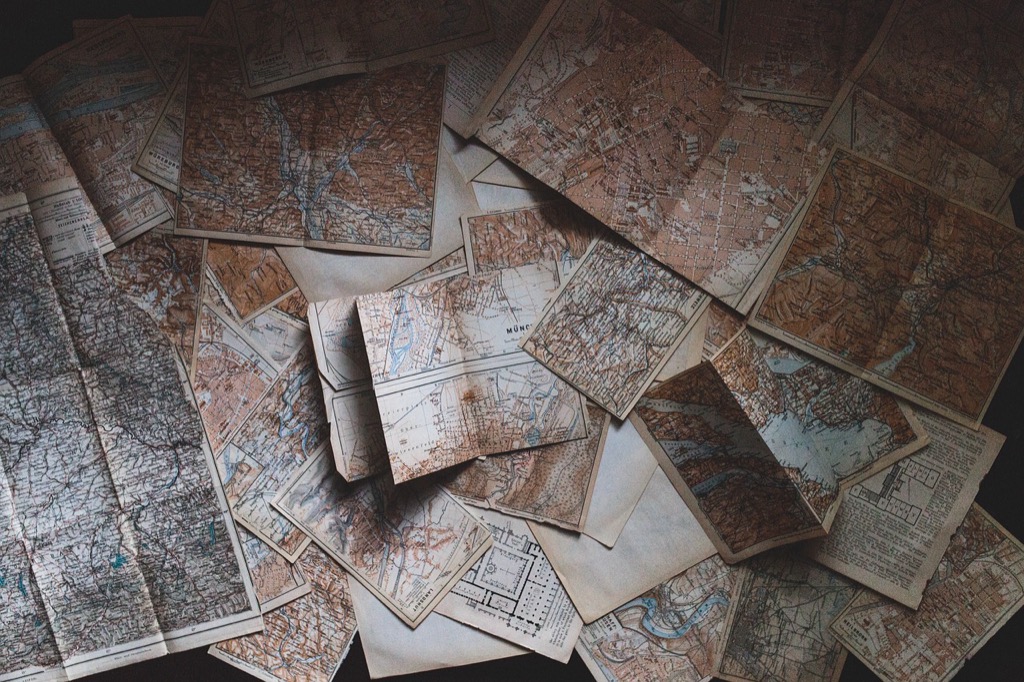
6 Best Map Labeling History (1500 BCE – Present)
Why it matters: Map labels have shaped how you understand geography and power for centuries.
The big picture: From ancient Roman road markers to modern GPS coordinates you’ve fundamentally changed how civilizations navigate communicate and claim territory through strategic labeling choices.
What’s ahead: These six pivotal moments in cartographic history reveal how your ancestors used text placement font choices and naming conventions to influence politics trade and cultural identity across continents.
Disclosure: As an Amazon Associate, this site earns from qualifying purchases. Thank you!
P.S. check out Udemy’s GIS, Mapping & Remote Sensing courses on sale here…
Ancient Mesopotamian Clay Tablets: The Dawn of Geographic Labeling
Ancient Mesopotamian clay tablets from 2300 BCE represent humanity’s first systematic approach to geographic labeling, establishing foundational principles that continue to influence modern cartographic practices.
[lasso id=”16024″]
Cuneiform Script and Early Place Names
Mesopotamian cartographers inscribed place names using wedge-shaped cuneiform characters, creating the world’s earliest standardized geographic labeling system. You’ll find these tablets featuring city names like Babylon, Ur, and Nippur positioned precisely alongside topographic features. Scribes developed consistent symbol placement rules, positioning settlement names above corresponding locations while river names followed waterway curves. Archaeological evidence shows mapmakers used standardized character sizes to indicate settlement hierarchy, with larger cities receiving more prominent labels than smaller villages.
[lasso id=”16718″]
Religious and Administrative Significance in Early Maps
Religious authorities commissioned these early maps to document temple locations and sacred boundaries, establishing labeling as a tool for territorial control. You can observe how priests strategically emphasized divine place names through enlarged cuneiform symbols and central positioning on tablets. Administrative officials used geographic labels to define tax collection districts, trade route endpoints, and military garrison locations across the empire. These maps served dual purposes: religious documentation for temple ceremonies and bureaucratic records for government administration, creating the first systematic relationship between cartographic labeling and institutional power.
Medieval European Manuscripts: Sacred Geography and Textual Integration
Medieval European cartographers transformed map labeling into a sacred art form, weaving biblical narratives directly into geographical representations. This integration of religious text and spatial understanding created a unique cartographic tradition that dominated European mapping for centuries.
Monastic Cartography and Biblical Place Names
Monastic scriptoriums became the primary centers for map production, where monks integrated biblical toponymy with contemporary geographical knowledge. You’ll find that medieval maps featured Jerusalem at their center, with labels like “Terra Sancta” and “Paradisus Terrestris” marking sacred locations. Benedictine monasteries produced the most influential examples, including the Hereford Mappa Mundi, which labeled over 500 biblical and classical place names using standardized Latin terminology that established naming conventions across Europe.
Gothic Script and Illuminated Map Labels
Gothic script revolutionized medieval map labeling through its distinctive vertical strokes and elaborate decorative elements that enhanced readability. You’ll notice that cartographers used different Gothic styles to create visual hierarchies—larger Textura script for major cities like Paris and Rome, while smaller Cursiva marked villages and geographical features. Illuminated manuscripts featured gold leaf highlighting for sacred locations, with red ink designating dangerous territories and blue ink marking bodies of water, creating a sophisticated color-coding system.
[lasso id=”16010″]
The Influence of Classical Sources on Medieval Naming
Medieval cartographers heavily relied on classical texts, particularly Ptolemy’s Geography and Pliny’s Natural History, for their naming conventions and geographical understanding. You’ll discover that many medieval maps preserved Roman place names alongside contemporary terms, creating dual-language labeling systems that connected ancient knowledge with medieval geography. This classical influence established enduring toponymic traditions—for example, the retention of Latin names like “Hibernia” for Ireland and “Lusitania” for Portugal that persisted through the Renaissance and influenced modern geographical nomenclature.
Islamic Golden Age Cartography: Scientific Precision in Geographic Nomenclature
Islamic scholars revolutionized cartographic labeling during the 8th through 13th centuries, establishing standardized methodologies that prioritized accuracy over artistic embellishment. Their systematic approach to geographic nomenclature created the foundation for modern scientific mapping practices.
Arabic Script and Transliteration Challenges
Arabic script’s right-to-left orientation and cursive nature created unique spatial arrangements on medieval maps. You’ll notice that Islamic cartographers developed specialized calligraphic techniques to accommodate curved coastlines and irregular terrain boundaries. They standardized diacritical marks to distinguish between similar place names like Damascus and Dimashq. Transliteration systems emerged to preserve pronunciation accuracy when recording foreign toponyms from Persian, Turkish, and Sanskrit sources. These innovations ensured consistent geographic identification across diverse linguistic regions.
Al-Idrisi’s Systematic Approach to Place Name Documentation
Al-Idrisi’s 1154 Tabula Rogeriana established comprehensive labeling protocols that influenced cartographic standards for centuries. You can observe his methodical classification system that categorized settlements by administrative importance, population size, and economic function. He documented over 2,400 place names using standardized Arabic terminology and precise longitudinal references. His systematic approach included verification procedures where multiple sources confirmed location accuracy before final inscription. This rigorous documentation process created the most comprehensive geographic database of the medieval period.
Integration of Trade Route Information in Map Labels
Islamic cartographers embedded commercial intelligence directly into their labeling systems through specialized notation methods. You’ll find that they used distinct symbols and abbreviations to mark caravan stops, market towns, and seasonal trading centers along major routes. They developed color-coded systems where red indicated permanent settlements while green marked temporary encampments. Distance markers appeared as numerical annotations between labeled locations, providing precise travel calculations for merchants. This integration transformed maps from simple geographic references into practical navigation tools for international commerce.
Renaissance Humanist Mapping: Classical Revival and Vernacular Languages
Renaissance cartographers embraced classical learning while adapting to emerging national identities. This period marked a crucial transition from medieval religious mapping to scientific geographic representation.
Return to Greco-Roman Geographic Terminology
You’ll find Renaissance mapmakers systematically revived ancient Greek and Roman place names, replacing medieval Latin versions with classical terminology. Ptolemy’s Geography became the authoritative reference, with cartographers like Gerardus Mercator restoring names like “Aegyptus” instead of medieval “Terra Pharaonis.” This classical revival wasn’t merely aesthetic—it represented a scholarly commitment to geographic accuracy based on ancient sources. Humanist scholars cross-referenced multiple classical texts to verify toponyms, creating standardized databases of Greek and Roman place names that influenced European cartography for centuries.
Emergence of National Languages in Cartographic Labeling
National languages began appearing on maps as Renaissance states consolidated political identity through cartographic representation. Italian cartographers started using vernacular labels alongside Latin text, while German mapmakers included Gothic script for regional features. Abraham Ortelius’s Theatrum Orbis Terrarum (1570) pioneered multilingual labeling systems, providing Latin names with vernacular alternatives in parentheses. French cartographers developed distinctive typographic styles for domestic territories, establishing visual sovereignty through linguistic differentiation. This linguistic diversity reflected growing nationalism and made maps accessible to broader audiences beyond scholarly circles.
[lasso id=”7170″]
Standardization Efforts by Early Geographic Societies
You’ll discover that Renaissance geographic societies established the first systematic approaches to cartographic labeling standards. The Venetian Academy created guidelines for font sizes, requiring larger text for major cities and smaller labels for villages. Flemish cartographers developed color-coding systems where black ink indicated permanent settlements and red marked temporary locations. Geographic societies published reference manuals specifying abbreviation systems—”Ep.” for episcopal seats, “Arx” for fortifications. These standardization efforts reduced confusion between different mapmakers’ works and established professional cartographic conventions that influenced modern mapping practices.
Colonial and Imperial Cartography: Power Dynamics in Place Naming
European colonial cartography from the 16th to 19th centuries weaponized map labels to establish territorial dominance and cultural hierarchy. Colonial powers systematically replaced indigenous place names with European designations, creating lasting geographic legacies that persist today.
European Renaming of Indigenous Territories
European explorers imposed their languages across conquered territories, erasing millennia of indigenous naming traditions. Spanish conquistadors renamed Tenochtitlan to Mexico City in 1521, while British colonists transformed Lenapehoking into Pennsylvania. French cartographers systematically replaced Algonquian place names throughout the Great Lakes region with Catholic saint designations. Colonial maps from this period show over 10,000 indigenous names replaced with European alternatives across the Americas. Portuguese navigators renamed coastal features along Africa’s Gold Coast, prioritizing royal patrons over local Akan terminology.
Administrative Control Through Cartographic Labels
Colonial administrators used standardized labeling systems to impose bureaucratic control over vast territories. British Ordnance Survey maps established uniform naming conventions across India, creating district boundaries that ignored traditional tribal territories. French colonial cartographers developed hierarchical labeling systems in West Africa, distinguishing between administrative centers and native settlements through font size variations. Spanish viceroyalties employed systematic grid references for New World territories, enabling efficient tax collection and military deployment. Dutch East India Company maps used color-coded labels to differentiate trading posts from indigenous villages, supporting commercial expansion strategies.
Cultural Erasure and Geographic Appropriation
Imperial cartography deliberately obscured indigenous cultural connections to ancestral lands through strategic label omissions. Australian colonial maps excluded Aboriginal sacred site names, replacing them with British explorer designations that severed spiritual connections to country. Canadian government surveys systematically removed Inuit place names from Arctic territories, imposing English alternatives that ignored traditional hunting and seasonal migration patterns. American territorial maps eliminated Native American tribal boundaries, creating artificial state lines that fractured indigenous nations. Colonial cartographers often retained indigenous names only when European alternatives proved impractical, preserving words like “Mississippi” while discarding thousands of smaller-scale traditional designations.
Modern Digital Cartography: Technology-Driven Labeling Evolution
Digital cartography has revolutionized how you approach map labeling through algorithmic precision and data-driven placement strategies. Computer-based systems now handle complex labeling decisions that once required hours of manual cartographic work.
GIS Systems and Automated Label Placement
GIS platforms like ArcGIS and QGIS use sophisticated algorithms to optimize label positioning automatically. You’ll find these systems calculate optimal placement using conflict detection, label hierarchy, and cartographic principles simultaneously. Maplex labeling engine prioritizes feature importance while avoiding overlaps through mathematical optimization. Point features receive circular buffer zones, linear features use offset positioning, and polygon labels employ centroid-based placement algorithms. These automated systems reduce your labeling time from days to minutes while maintaining professional cartographic standards.
Multilingual Mapping and Unicode Standards
Unicode support enables you to display multiple languages and scripts simultaneously on digital maps without character encoding conflicts. Modern mapping platforms handle Arabic, Chinese, Cyrillic, and Latin scripts within single map compositions. Google Maps demonstrates this capability by switching between local language labels and romanized versions based on user location. OpenStreetMap’s tagging system stores place names in multiple languages using standardized name:language codes. You’ll achieve better international accessibility by implementing UTF-8 encoding and testing font compatibility across different writing systems and character sets.
Crowdsourced Geographic Information and Naming Conflicts
Crowdsourced platforms like OpenStreetMap create new challenges for you when managing conflicting place names from multiple contributors. Wikipedia’s geographic coordinates often conflict with local naming conventions, requiring editorial oversight and verification protocols. You’ll encounter disputes over contested territories, indigenous versus colonial names, and transliteration variations within single datasets. Wikidata provides structured geographic data but requires careful validation against authoritative sources. Successful crowdsourced labeling projects implement contributor ranking systems, edit history tracking, and community moderation tools to maintain geographic accuracy and cultural sensitivity.
Conclusion
Understanding these six historical perspectives reveals how cartographic labeling has shaped your perception of the world for millennia. From ancient Mesopotamian clay tablets to today’s digital mapping platforms you’ve witnessed how text on maps carries immense political and cultural weight.
The evolution of map labeling reflects humanity’s ongoing struggle for representation and recognition. Whether through colonial erasure of indigenous names or modern crowdsourced corrections you can see how cartography remains a contested space where power dynamics play out through seemingly simple text placement.
As you navigate today’s digital world consider how the labels you encounter on maps continue this ancient tradition of storytelling through geography. Every place name carries history and every font choice reflects the mapmaker’s perspective on what deserves prominence in our shared geographic narrative.
Frequently Asked Questions
What is the earliest known example of geographic labeling?
The earliest systematic geographic labeling dates back to ancient Mesopotamian clay tablets from 2300 BCE. These tablets used cuneiform script to inscribe city names like Babylon and Ur alongside topographic features, creating humanity’s first standardized geographic labeling system for both religious and bureaucratic purposes.
How did medieval European cartographers approach map labeling?
Medieval European cartographers transformed map labeling into a sacred art form, integrating biblical narratives with geographical representations. Monastic scriptoriums produced maps like the Hereford Mappa Mundi, which labeled over 500 biblical and classical place names in standardized Latin using Gothic script.
What made Islamic Golden Age cartography unique in terms of labeling?
Islamic scholars from the 8th to 13th centuries revolutionized cartographic labeling by prioritizing scientific accuracy over religious narratives. They developed specialized calligraphic techniques for Arabic script, with works like Al-Idrisi’s Tabula Rogeriana systematically documenting place names and integrating trade route information.
How did Renaissance cartography change map labeling practices?
Renaissance cartographers revived ancient Greek and Roman place names while incorporating emerging national languages. They replaced medieval Latin versions with classical designations, made maps more accessible to broader audiences, and established systematic labeling standards including guidelines for font sizes and color-coding systems.
What role did map labeling play in colonial expansion?
European colonial powers weaponized map labels to establish territorial dominance and cultural hierarchy. They systematically replaced indigenous place names with European designations, imposed standardized bureaucratic labeling systems, and erased millennia of native naming traditions to assert control over colonized territories.
How has digital technology transformed modern map labeling?
Digital cartography uses sophisticated algorithms for automated label placement through GIS platforms like ArcGIS and QGIS. Unicode standards enable multilingual mapping capabilities, while crowdsourced geographic information creates new challenges requiring editorial oversight to ensure accuracy and cultural sensitivity in place naming.