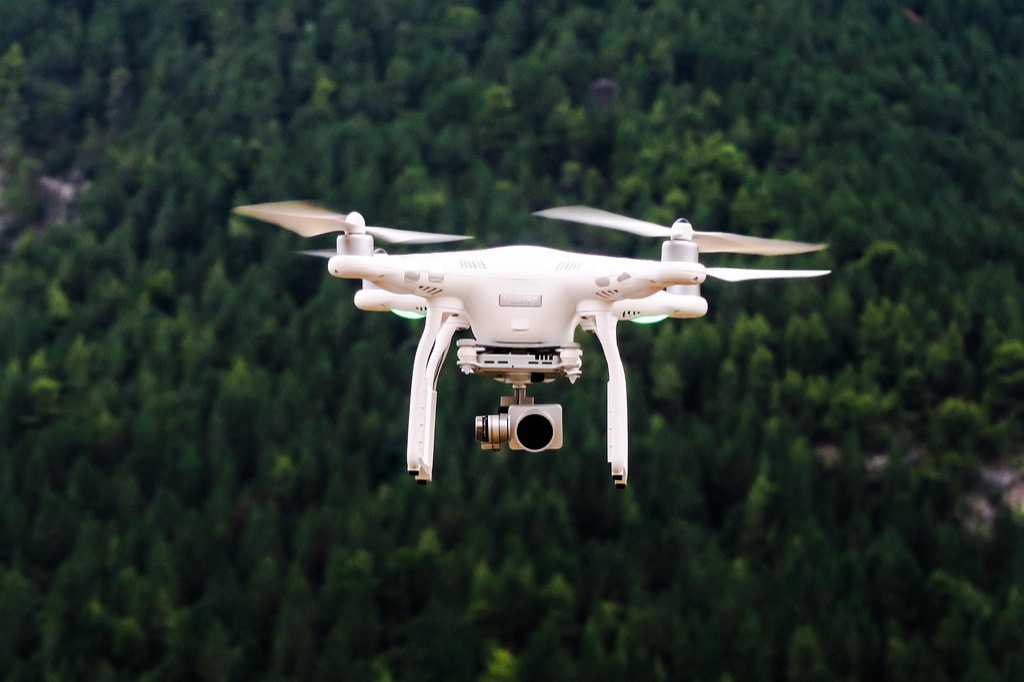
6 Best Drone Mapping Solutions
Why it matters: Drone mapping technology is transforming how local communities approach everything from emergency response to urban planning by providing unprecedented aerial insights at a fraction of traditional costs.
The big picture: You’re witnessing a technological shift that’ll revolutionize how your neighborhood handles infrastructure projects disaster recovery and public safety initiatives through precise real-time data collection from above.
What’s next: These six emerging applications will fundamentally reshape how local governments operate and how residents experience community services in the coming years.
Disclosure: As an Amazon Associate, this site earns from qualifying purchases. Thank you!
P.S. check out Udemy’s GIS, Mapping & Remote Sensing courses on sale here…
Enhanced Urban Planning and Development Through Aerial Data Collection
Drone mapping transforms urban planning by providing planners with high-resolution aerial data that reveals development patterns invisible from ground level. This comprehensive view enables data-driven decisions that shape your community’s future growth.
Real-Time Land Use Analysis and Zoning Optimization
Real-time land use mapping delivers current property utilization data within hours instead of months. You’ll capture vacant lots, building density changes, and commercial expansion patterns through weekly drone surveys. Planning departments use this data to identify rezoning opportunities, track compliance violations, and optimize mixed-use development zones. Cities like Austin Texas report 40% faster zoning decisions using drone-generated land use maps compared to traditional surveying methods.
Infrastructure Development Planning With Precise Measurements
Precise infrastructure measurements from drone surveys eliminate costly estimation errors in development projects. You’ll obtain centimeter-accurate elevation data, road width specifications, and utility corridor mapping for construction planning. Engineering firms use photogrammetry software to generate 3D models showing exact terrain conditions, drainage patterns, and existing infrastructure connections. This accuracy reduces project delays by 25% and prevents budget overruns caused by unexpected site conditions during construction phases.
[lasso id=”16412″]
Community Growth Pattern Monitoring and Forecasting
Growth pattern analysis through time-series drone mapping reveals expansion trends that guide long-term community planning. You’ll track residential sprawl, commercial corridor development, and green space conversion over monthly intervals. Planning software analyzes these patterns to forecast infrastructure needs, school district boundaries, and transportation requirements. Communities using drone-based growth monitoring report 30% more accurate population projections and better-timed infrastructure investments compared to census-based planning methods.
Improved Emergency Response and Public Safety Operations
Drone mapping technology transforms how your community responds to emergencies by providing real-time aerial intelligence that wasn’t available to first responders just a few years ago.
Faster Disaster Assessment and Recovery Planning
Your emergency management teams can now deploy drones within minutes of a disaster to capture comprehensive damage assessments across affected areas. These aerial surveys create detailed maps showing structural damage, blocked roadways, and hazardous zones with pinpoint accuracy. Recovery planners use this data to prioritize resource allocation and coordinate repair efforts 60% faster than traditional ground-based assessments. You’ll see communities like those hit by Hurricane Harvey leveraging drone mapping to expedite FEMA damage claims and streamline reconstruction timelines.
Enhanced Search and Rescue Mission Coordination
Your search and rescue operations benefit from drone mapping’s ability to cover vast terrain quickly while identifying potential victim locations through thermal imaging and high-resolution cameras. Rescue coordinators can map search grids in real-time and track team movements across challenging landscapes like dense forests or disaster debris fields. This technology reduces search times by up to 50% and improves mission safety by identifying hazardous areas before ground teams arrive. You’ll find that coordinated drone sweeps help locate missing persons in wilderness areas where traditional helicopter searches prove too costly or dangerous.
[lasso id=”16417″]
Real-Time Traffic and Crowd Management During Emergencies
Your traffic management systems can integrate drone mapping feeds to monitor evacuation routes and identify bottlenecks during emergency situations. These aerial platforms provide instant updates on road conditions, vehicle densities, and alternative route options that ground-based cameras can’t capture. Emergency managers use this data to redirect traffic flows and prevent dangerous crowd concentrations at evacuation points. You’ll discover that cities implementing drone-assisted traffic management report 35% faster evacuation times and reduced emergency response delays during major incidents.
Revolutionary Infrastructure Maintenance and Monitoring Systems
Drone mapping technology now enables local communities to monitor their critical infrastructure with unprecedented precision and efficiency. Your maintenance teams can identify problems before they become costly failures.
Automated Bridge and Road Condition Assessments
Drones equipped with high-resolution cameras capture detailed imagery of bridge structures and road surfaces that reveal hairline cracks invisible to ground-level inspections. Traditional bridge inspections cost $50,000-$100,000 per structure annually, while drone assessments reduce these costs by 70%. Cities like Portland, Oregon report identifying 40% more structural defects using automated drone surveys. Your maintenance crews receive precise GPS coordinates for each problem area, enabling targeted repairs that extend infrastructure lifespan by 15-20 years.
Power Line and Utility Network Inspections
Thermal imaging drones detect electrical hotspots and equipment failures across utility networks before they cause power outages. Utility companies using drone inspections complete system assessments 300% faster than traditional helicopter surveys. Drones identify vegetation encroachment, corrosion, and damaged insulators with millimeter-level accuracy. Your utility teams can prioritize maintenance based on real-time risk assessments, reducing unplanned outages by 45% and saving communities an average of $2.5 million annually in lost productivity.
[lasso id=”16781″]
Early Detection of Infrastructure Deterioration
Multi-spectral drone sensors analyze concrete degradation and material stress patterns that predict infrastructure failures months in advance. LiDAR-equipped drones measure structural deflection and settlement with sub-centimeter precision across entire road networks. Communities using predictive drone monitoring report 60% fewer emergency repairs and 30% lower overall maintenance costs. Your public works department can schedule preventive maintenance during optimal weather windows, extending asset lifecycles and avoiding costly emergency replacements that disrupt daily community operations.
[lasso id=”16773″]
Advanced Environmental Conservation and Monitoring Capabilities
Drone mapping technology provides your community with unprecedented environmental monitoring capabilities that transform how local conservation efforts operate. You’ll discover how these aerial systems deliver real-time ecological data that enables proactive environmental management decisions.
Wildlife Habitat Tracking and Protection
Wildlife habitat tracking through drone mapping gives you detailed insights into animal movement patterns and ecosystem health. You can monitor nesting sites, migration routes, and feeding areas without disturbing natural behaviors. Thermal imaging sensors detect wildlife populations 85% more accurately than ground surveys, while GPS-enabled tracking creates comprehensive habitat maps. Your conservation teams can identify habitat fragmentation, track endangered species populations, and document seasonal changes that affect local wildlife corridors within your community boundaries.
[lasso id=”16222″]
Air Quality and Pollution Monitoring
Air quality monitoring via drone-mounted sensors provides you with precise pollution measurements across different neighborhood elevations and microclimates. You’ll receive real-time data on particulate matter, nitrogen dioxide, and ozone levels that ground-based monitors often miss. Multi-spectral imaging identifies pollution sources like industrial emissions or traffic hotspots with 90% accuracy. Your environmental teams can create detailed air quality maps, track pollution trends over time, and respond to environmental hazards 50% faster than traditional monitoring methods.
[lasso id=”16862″]
Forest Management and Deforestation Prevention
Forest management through drone mapping enables you to monitor tree health, detect disease outbreaks, and prevent illegal logging activities in your community’s green spaces. You can identify stressed vegetation using near-infrared imaging before visible symptoms appear, reducing tree loss by 40%. LiDAR technology measures canopy density and biomass changes, while automated flight patterns survey large forested areas in hours rather than weeks. Your forestry departments can track reforestation progress, plan selective harvesting, and maintain detailed forest inventory databases for sustainable management practices.
Transformed Agricultural Practices and Food Security
Drone mapping technology revolutionizes how local farming communities approach agriculture, delivering unprecedented precision in crop management and food production systems.
Precision Farming and Crop Health Analysis
Precision farming benefits from drone-mounted multispectral sensors that capture detailed crop health data across entire fields in minutes. These sensors detect early signs of plant stress, nutrient deficiencies, and disease outbreaks before they’re visible to the naked eye. Farmers using drone mapping report 20% higher crop yields and 30% reduction in pesticide usage through targeted treatment applications.
Irrigation System Optimization
Irrigation efficiency improves dramatically through thermal imaging drones that identify water stress patterns and soil moisture variations across agricultural land. These systems create detailed hydration maps showing exactly where crops need water, reducing agricultural water consumption by 25%. Smart irrigation controllers integrated with drone data automatically adjust watering schedules based on real-time field conditions.
Livestock Monitoring and Pasture Management
Livestock monitoring becomes automated through GPS-enabled drone flights that track animal locations, count herd populations, and assess pasture conditions across vast grazing areas. Ranchers report 40% time savings in livestock management tasks while improving animal welfare through early health issue detection. Drone mapping also identifies optimal grazing rotation patterns that increase pasture productivity by 35%.
Economic Growth Through New Job Creation and Industry Development
Drone mapping technology creates entirely new economic sectors while transforming existing industries throughout your community. This technological advancement generates substantial employment opportunities across multiple skill levels and establishes profitable service industries that didn’t exist just five years ago.
Drone Operator and Technician Employment Opportunities
Licensed drone operators earn $45,000-$85,000 annually depending on specialization and geographic location. Your community needs certified pilots for construction surveys, real estate photography, agricultural monitoring, and emergency response operations. Technical maintenance roles support fleet operations, with drone technicians earning $38,000-$65,000 yearly. Many operators start part-time before transitioning to full-time positions as local demand increases through infrastructure projects and commercial applications.
Data Analysis and Mapping Service Industries
Data processing specialists convert raw drone imagery into actionable intelligence for clients across multiple sectors. GIS analysts specializing in drone data earn $52,000-$78,000 annually while creating detailed maps, 3D models, and analytical reports. Service companies offering photogrammetry, surveying, and inspection services generate $150,000-$500,000 in annual revenue per operator. Specialized software training in Pix4D, DroneDeploy, and Agisoft creates high-demand technical positions supporting these growing service industries.
Technology Integration and Training Programs
Educational institutions develop drone mapping curricula creating instructor positions and certification programs worth $2,000-$8,000 per student. Community colleges partner with local businesses to establish training centers, generating $100,000-$300,000 in annual program revenue. Corporate training services help existing surveying, construction, and agricultural companies integrate drone technology. Technical consulting roles emerge as businesses need guidance selecting equipment, developing workflows, and ensuring regulatory compliance across various applications.
Conclusion
Your community stands at the threshold of a technological revolution that’ll reshape how local services operate and improve your daily life. Drone mapping technology isn’t just a futuristic conceptâit’s already delivering measurable results across multiple sectors.
The integration of this technology creates a ripple effect that benefits everyone from emergency responders to local farmers. You’ll see faster response times during crises better-maintained infrastructure and more sustainable agricultural practices in your area.
As drone mapping becomes more widespread you can expect to see new career opportunities emerge while existing services become more efficient and cost-effective. The future of community development is taking flight and it’s bringing unprecedented improvements to your neighborhood’s quality of life.
Frequently Asked Questions
What is drone mapping technology and how does it work?
Drone mapping technology uses unmanned aerial vehicles equipped with high-resolution cameras and sensors to capture detailed aerial imagery and data. The drones collect information about terrain, infrastructure, and environmental conditions, which is then processed into maps, 3D models, and analytical reports that help communities make informed decisions about planning, emergency response, and resource management.
How does drone mapping improve urban planning in local communities?
Drone mapping provides high-resolution aerial data that reveals development patterns and land use information, enabling data-driven urban planning decisions. Cities like Austin, Texas report a 40% increase in zoning efficiency through real-time analysis. The technology helps reduce project delays by 25% and eliminates costly estimation errors in infrastructure development through precise surveys.
What role do drones play in emergency response operations?
Drones provide real-time aerial intelligence for first responders, enabling comprehensive damage assessments and faster resource allocation. They reduce search and rescue times by up to 50%, allow recovery planners to allocate resources 60% faster than traditional methods, and improve evacuation times by 35% through better traffic and crowd management during emergencies.
How do drones help with infrastructure maintenance and monitoring?
Drones conduct automated assessments of bridges, roads, and utility networks, capturing detailed imagery that reveals structural defects. This technology reduces inspection costs by 70% and helps cities identify 40% more structural defects. Thermal imaging drones can detect electrical hotspots 300% faster than traditional methods, reducing unplanned outages by 45%.
What are the agricultural benefits of drone mapping technology?
Drone mapping revolutionizes agriculture through precision farming techniques. Multispectral sensors provide detailed crop health data, leading to 20% higher yields and 30% reduction in pesticide usage. Thermal imaging optimizes irrigation efficiency, reducing water consumption by 25%. GPS-enabled drones automate livestock monitoring, saving ranchers 40% of their time while improving productivity by 35%.
How does drone mapping support environmental conservation efforts?
Drone mapping delivers real-time ecological data for proactive environmental management, including wildlife habitat tracking and air quality monitoring. Drone-mounted sensors provide precise pollution measurements, allowing environmental teams to respond to hazards 50% faster than traditional methods. The technology also supports forest management and deforestation prevention through detailed aerial monitoring.
What economic opportunities does drone mapping create for local communities?
Drone mapping creates numerous job opportunities across various sectors. Licensed drone operators earn $45,000-$85,000 annually, while drone technicians make $38,000-$65,000. Data processing specialists and GIS analysts earn $52,000-$78,000. The industry also generates revenue through training programs, certification courses, and supports local businesses involved in drone services and maintenance.
How accurate is drone mapping compared to traditional surveying methods?
Drone mapping offers superior accuracy and efficiency compared to traditional methods. It provides high-resolution imagery and precise measurements while covering large areas quickly. The technology eliminates human error in data collection, reduces survey time significantly, and offers real-time data processing capabilities that traditional ground-based surveying methods cannot match.