7 Methods for Accurate Georeferencing That Improve Precision
Why it matters: Accurate georeferencing transforms raw spatial data into precise location intelligence that drives everything from urban planning to emergency response systems.
The big picture: You’re dealing with increasingly complex geospatial datasets that demand pinpoint accuracy â whether you’re mapping infrastructure projects or analyzing environmental changes across vast territories.
What’s ahead: These seven proven methods will help you achieve sub-meter precision while avoiding costly errors that can derail entire mapping projects.
Disclosure: As an Amazon Associate, this site earns from qualifying purchases. Thank you!
P.S. check out Udemy’s GIS, Mapping & Remote Sensing courses on sale here…
Ground Control Points (GCP) Method
Ground Control Points establish the foundation for accurate georeferencing by providing known coordinate positions that link your imagery to real-world locations. This method relies on surveyed reference points with precise coordinates to transform and align spatial data with exceptional accuracy.
Selecting High-Quality Reference Points
Choose permanent, clearly identifiable features that won’t change over time or weather conditions. Survey monuments, building corners, road intersections, and concrete structures provide the most reliable reference points. Avoid temporary features like vehicles, seasonal vegetation, or construction materials that could shift position. Your GCPs should appear sharp and distinct in your imagery, making them easy to identify during the georeferencing process.
Optimal GCP Distribution Patterns
Distribute your GCPs evenly across the entire image area to minimize geometric distortion and maximize accuracy. Place at least four points near the image corners with additional points throughout the center for large datasets. Maintain consistent spacing between points and avoid clustering them in one area. The ideal pattern forms a grid covering your project boundary, ensuring transformation accuracy remains consistent across the mapped area.
Field Survey Techniques for GCP Collection
Use high-precision GPS equipment to collect GCP coordinates with sub-meter accuracy whenever possible. RTK-GPS systems provide centimeter-level precision for critical mapping projects. Document each point with photographs showing the exact feature used and record detailed descriptions for future reference. Measure points during optimal GPS conditions with clear sky visibility and minimal atmospheric interference to ensure coordinate reliability.
Real-Time Kinematic (RTK) GPS Integration
RTK GPS technology elevates your georeferencing accuracy by providing real-time corrections to standard GPS signals. This method achieves centimeter-level precision through continuous communication between a base station and your field equipment.
RTK Base Station Setup Requirements
You’ll need to establish your base station on a surveyed benchmark with known coordinates for optimal RTK performance. Position the base station antenna at least 15 feet above ground level to minimize signal obstructions from buildings, trees, and terrain features. Your setup requires a clear line of sight to satellites across at least 75% of the sky hemisphere. Ensure stable power supply and cellular or radio communication links between the base station and your rover units operating within the 10-kilometer effective range.
Precision Benefits Over Standard GPS
RTK GPS delivers horizontal accuracy within 1-2 centimeters compared to standard GPS accuracy of 3-5 meters under ideal conditions. You’ll achieve vertical precision improvements from 5-10 meters down to 2-3 centimeters with proper RTK implementation. Real-time corrections eliminate atmospheric delays and satellite orbit errors that degrade standard GPS measurements. This precision level supports high-accuracy mapping applications including cadastral surveys, construction stakeout, and precision agriculture where sub-meter accuracy proves insufficient for project requirements.
Cost-Effective RTK Implementation Strategies
Consider RTK network services like CORS (Continuously Operating Reference Stations) to eliminate base station setup costs and maintenance requirements. You can reduce equipment expenses by sharing RTK base stations among multiple field teams working within the coverage area. Implement smartphone-based RTK solutions using apps like SW Maps or Field Genius for basic surveying tasks requiring centimeter accuracy. Lease RTK equipment for short-term projects rather than purchasing expensive systems that may sit idle between mapping campaigns.
Photogrammetric Control Networks
Photogrammetric control networks provide geometric stability across large mapping areas by establishing interconnected reference points. You’ll achieve superior accuracy by creating redundant measurement connections between control points.
Establishing Triangulation Networks
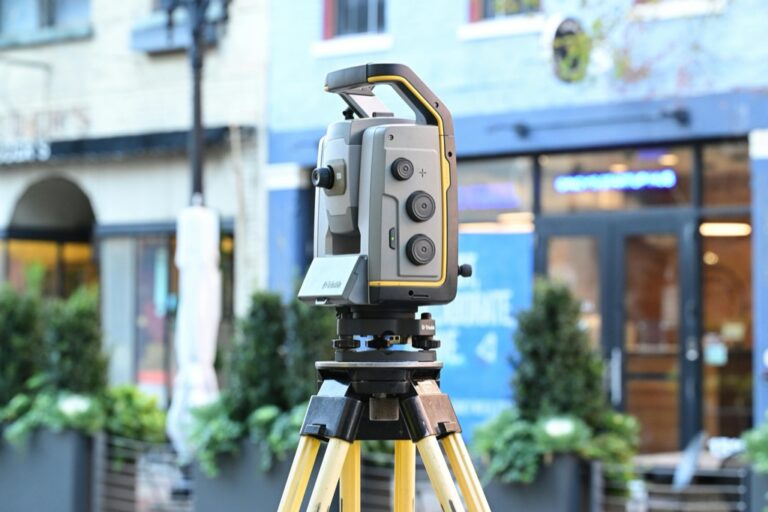
Triangulation networks create geometric strength through overlapping measurements between multiple control points. You’ll need to establish at least three well-distributed points forming stable triangles across your survey area. Position control points at terrain high points like hilltops or building corners to maximize visibility between stations. Use theodolites or total stations to measure horizontal and vertical angles between network points. Modern GPS-assisted triangulation combines traditional angle measurements with satellite positioning for enhanced reliability. Calculate network adjustments to distribute measurement errors evenly across all control points.
[lasso id=”7211″]
Camera Calibration Procedures
Camera calibration determines your equipment’s internal geometric properties to eliminate systematic distortions. You’ll need to photograph calibration targets from multiple angles and distances before fieldwork begins. Use specialized software like Agisoft Metashape or Pix4D to calculate focal length, principal point location, and lens distortion parameters. Document calibration results including radial distortion coefficients and tangential distortion values. Recalibrate cameras after any physical impacts or lens changes to maintain measurement accuracy. Store calibration certificates with your survey documentation for quality assurance and future reference.
Bundle Adjustment Optimization
Bundle adjustment simultaneously refines camera positions, orientations, and 3D coordinates of measured points. You’ll process all image observations together to minimize geometric inconsistencies across your entire dataset. Use software solutions like ERDAS IMAGINE or Trimble Inpho to perform iterative calculations that optimize all parameters simultaneously. Check residual errors after adjustment to identify problematic measurements or control points requiring attention. Achieve sub-pixel accuracy by setting appropriate convergence criteria and weight factors for different observation types. Generate statistical reports showing final coordinate precision and measurement reliability indicators.
Differential GPS (DGPS) Correction Techniques
DGPS correction techniques enhance standard GPS accuracy by applying real-time or post-processed corrections from reference stations with known coordinates. These methods reduce satellite signal errors and atmospheric disturbances that affect positioning precision.
Base Station Reference Selection
Select permanently monumented benchmarks with precise coordinates as your DGPS base station locations. Position base stations within 50 kilometers of your survey area to maintain correction accuracy, as ionospheric and tropospheric errors increase with distance. Choose sites with clear sky visibility and minimal electromagnetic interference from power lines or radio towers. Verify benchmark coordinates through multiple independent surveys before establishing correction services. Ensure your reference station remains stable throughout the entire survey period to prevent systematic positioning errors.
Real-Time Correction Processing
Receive DGPS corrections through radio beacons, cellular networks, or satellite communication systems during active surveying operations. Apply corrections instantly to your rover GPS receiver using standard formats like RTCM or CMR protocols. Monitor correction age and quality indicators to ensure reliable positioning, as corrections older than 30 seconds may compromise accuracy. Maintain continuous communication links between base and rover units to prevent data gaps. Verify correction application by comparing real-time positions with known control points throughout your survey.
[lasso id=”7293″]
Post-Processing DGPS Methods
Collect raw GPS observations from both base and rover receivers simultaneously during field operations. Process the data using specialized software like Trimble Business Center or Leica Infinity to apply differential corrections retrospectively. Import precise ephemeris data and atmospheric models to enhance correction accuracy beyond real-time capabilities. Generate coordinate solutions with statistical quality assessments including standard deviations and confidence intervals. Export corrected positions in your required coordinate system and datum for integration with mapping projects.
Satellite Imagery Registration Methods
Building on established georeferencing techniques, satellite imagery requires specialized registration methods to align multiple spectral bands and ensure geometric accuracy across the entire scene.
Multi-Spectral Band Alignment
Align multiple spectral bands by correcting sensor-specific geometric distortions that occur during satellite data acquisition. Modern satellites like Landsat 8 and Sentinel-2 capture each spectral band through separate sensor arrays, creating slight positional shifts between bands.
Use specialized software like ENVI or ERDAS IMAGINE to perform band-to-band registration using cross-correlation algorithms. Select stable ground features such as road intersections or building corners as reference points across all spectral bands. Apply polynomial transformations to correct systematic offsets, achieving sub-pixel alignment accuracy typically within 0.3 pixels for high-quality satellite imagery.
Automated Feature Matching Algorithms
Leverage automated feature detection to identify corresponding points between satellite images and reference datasets using computer vision algorithms. Scale-Invariant Feature Transform (SIFT) and Speeded-Up Robust Features (SURF) algorithms excel at detecting distinctive image features regardless of rotation or scale differences.
Configure feature matching parameters in software like ArcGIS Pro or QGIS to optimize detection sensitivity for your specific imagery type. Set matching thresholds between 0.7-0.9 to balance accuracy with successful match rates. Apply RANSAC outlier removal to eliminate incorrect matches, typically achieving 85-95% successful feature correspondence in high-contrast satellite imagery.
Manual Tie Point Selection
Select manual tie points when automated methods fail in low-contrast areas or complex terrain where distinctive features are sparse. Choose permanent infrastructure elements like building corners, road intersections, or distinctive terrain features that remain stable over time.
Distribute tie points evenly across the image area, placing a minimum of 10-15 points for standard satellite scenes. Use image enhancement techniques like histogram stretching or band combinations to improve feature visibility during manual selection. Achieve geometric accuracy within 1-2 pixels by selecting points at the exact center of recognizable features rather than along edges or boundaries.
LiDAR Point Cloud Georeferencing
LiDAR point cloud georeferencing transforms three-dimensional laser scanning data into accurately positioned spatial datasets. You’ll achieve precise coordinate registration by applying these specialized techniques designed for volumetric point data.
Direct Georeferencing Workflows
Direct georeferencing integrates GPS/INS positioning data directly with LiDAR measurements during data acquisition. You’ll combine high-precision GPS coordinates with inertial navigation system orientation data to position each laser pulse automatically. Modern LiDAR systems like Riegl VZ-400i or Leica ScanStation record trajectory information simultaneously with point measurements. This workflow eliminates manual control point placement but requires post-processing software such as TerraSolid or LAStools to merge positioning data with point coordinates for final georeferenced output.
Indirect Georeferencing Approaches
Indirect georeferencing uses surveyed ground control points to transform LiDAR coordinates after data collection. You’ll identify distinctive features like building corners or road intersections within your point cloud and match them to precisely surveyed reference coordinates. CloudCompare or Trimble RealWorks software enables manual point identification and transformation matrix calculation. This approach works effectively when direct GPS positioning isn’t available or when you need to register multiple scanning positions into a unified coordinate system using iterative closest point algorithms.
Point Cloud Registration Techniques
Point cloud registration aligns overlapping LiDAR datasets using geometric feature matching algorithms. You’ll use software like PCL (Point Cloud Library) or Autodesk ReCap to identify corresponding surfaces between adjacent scans. Automated registration algorithms detect planar surfaces, edges, and geometric primitives to calculate optimal transformation parameters. Manual registration involves selecting matching points across datasets when automated methods fail on featureless terrain. These techniques achieve millimeter-level accuracy when combining multiple scanning positions or merging terrestrial with airborne LiDAR data.
Coordinate System Transformation Protocols
Proper coordinate system transformation ensures your georeferenced data integrates seamlessly with existing GIS databases and mapping frameworks. You’ll need to establish standardized protocols that maintain accuracy while converting between different spatial reference systems.
Datum Selection and Conversion
Datum selection determines the fundamental accuracy of your entire georeferencing project. You should identify your project’s target datum early, typically choosing NAD83 for North American projects or WGS84 for global applications. Modern transformation software like Esri ArcGIS or QGIS provides accurate conversion parameters between major datums. You’ll achieve sub-meter accuracy when converting between well-defined datums using established transformation grids like NADCON5 or NTv2.
Projection Parameter Configuration
Projection parameters control how your curved Earth data appears on flat mapping surfaces. You must configure central meridian, standard parallels, and false easting values to match your project area’s coordinate system. State Plane Coordinate Systems offer optimal accuracy for regional projects, while UTM zones work best for larger geographic areas. You should verify projection parameters using authoritative sources like EPSG.org database or NIST geodetic toolkit to prevent systematic positioning errors.
Accuracy Assessment Standards
Accuracy standards define acceptable error tolerances for your georeferencing workflow. You should establish horizontal accuracy requirements based on your mapping scale, typically achieving 1:2400 scale accuracy for urban planning applications. ASPRS Positional Accuracy Standards provide industry benchmarks, requiring 95% confidence intervals for horizontal measurements. You’ll document accuracy assessment results using root mean square error (RMSE) calculations and maintain quality control reports for validation purposes.
Conclusion
Mastering these seven georeferencing methods will dramatically improve your spatial data accuracy and project outcomes. Each technique serves specific applications – from RTK GPS for real-time precision to LiDAR registration for complex 3D datasets.
Your choice of method depends on project requirements accuracy tolerances and available resources. Combining multiple approaches often yields the best results particularly for large-scale mapping initiatives.
Remember that proper coordinate system transformation and accuracy assessment aren’t optional steps – they’re essential for maintaining data integrity. Start implementing these methods gradually and you’ll see immediate improvements in your georeferencing workflow efficiency and precision.
Frequently Asked Questions
What is georeferencing and why is it important?
Georeferencing is the process of converting raw spatial data into precise location intelligence by assigning real-world coordinates to geographic data. It’s essential for applications like urban planning and emergency response, as it transforms datasets into accurate, usable mapping information that can be integrated with existing GIS databases and used for critical decision-making.
What are Ground Control Points (GCPs) and how do they work?
Ground Control Points are surveyed reference points with known coordinates used to align spatial data with high precision. They serve as anchor points that help transform raw imagery or data into accurate geographic positions. GCPs should be permanent features like building corners or road intersections, distributed evenly across the survey area to minimize geometric distortion.
How accurate is RTK GPS compared to standard GPS?
RTK GPS achieves centimeter-level precision, significantly outperforming standard GPS which typically has 3-5 meter accuracy. RTK provides real-time corrections to GPS signals, improving both horizontal and vertical accuracy. This enhanced precision makes RTK ideal for high-accuracy mapping applications where sub-meter precision is required for reliable results.
What is a Photogrammetric Control Network?
A Photogrammetric Control Network is a system of interconnected reference points that provides geometric stability across large mapping areas. These networks enhance accuracy through redundant measurement connections between multiple control points, creating a strong geometric framework. The network approach helps distribute and minimize errors across the entire survey area.
How does Differential GPS (DGPS) improve positioning accuracy?
DGPS enhances standard GPS accuracy by applying corrections from reference stations with known coordinates. These corrections can be applied in real-time or during post-processing to eliminate common GPS errors. DGPS typically achieves sub-meter accuracy when the reference station is within 50 kilometers of the survey area, making it cost-effective for many mapping projects.
What are the main methods for georeferencing satellite imagery?
The main methods include Multi-Spectral Band Alignment to correct sensor distortions, Automated Feature Matching using computer vision algorithms to identify corresponding points, and Manual Tie Point Selection for complex cases. These techniques ensure geometric accuracy across different spectral bands and align satellite imagery with reference datasets for precise mapping applications.
How is LiDAR point cloud data georeferenced?
LiDAR georeferencing uses two primary approaches: Direct Georeferencing integrates GPS/INS positioning during data acquisition, while Indirect Georeferencing uses surveyed ground control points for post-collection transformation. Point Cloud Registration Techniques align overlapping datasets using geometric feature matching, often achieving millimeter-level accuracy when combining multiple scanning positions.
Why is coordinate system transformation important in georeferencing?
Coordinate system transformation ensures georeferenced data integrates seamlessly with existing GIS databases. Different datasets often use various spatial reference systems, so proper transformation protocols are essential for data compatibility. This includes accurate datum conversion and projection parameter configuration to match the project’s coordinate system requirements.
What accuracy standards should be used for georeferencing projects?
ASPRS Positional Accuracy Standards are commonly used to define acceptable error tolerances. Root Mean Square Error (RMSE) calculations help document accuracy assessment results. The specific accuracy requirements depend on the project’s intended use, with applications like urban planning typically requiring higher precision than general mapping projects.
What equipment is needed for high-precision georeferencing?
High-precision georeferencing typically requires survey-grade GPS equipment, RTK base stations or network access, and specialized software for processing corrections. For photogrammetric projects, calibrated cameras and ground control point measurement tools are essential. The specific equipment depends on the chosen georeferencing method and required accuracy levels.