7 Diverse Map Restoration Techniques That Preserve Ancient Arts
Why it matters: Your vintage maps represent irreplaceable pieces of history, but time, moisture, and handling have likely left them damaged and deteriorating. Without proper restoration techniques, these cartographic treasures could be lost forever, taking valuable historical insights and geographical knowledge with them.
[lasso id=”16952″]
The big picture: Map restoration combines traditional conservation methods with cutting-edge digital technologies to breathe new life into damaged documents. From paper repairs and ink stabilization to advanced digital reconstruction, restoration specialists use seven distinct techniques to preserve these historical artifacts for future generations.
Disclosure: As an Amazon Associate, this site earns from qualifying purchases. Thank you!
P.S. check out Udemy’s GIS, Mapping & Remote Sensing courses on sale here…
Understanding the Importance of Map Restoration for Historical Preservation
Historical maps serve as irreplaceable windows into past civilizations and geographical understanding. You’ll find that proper restoration techniques ensure these cartographic treasures remain accessible for future generations of researchers and historians.
Preserving Cultural Heritage Through Cartographic Conservation
Cultural preservation through map restoration maintains connections to ancestral knowledge and territorial understanding. You’re protecting centuries of cartographic evolution when you restore antique maps using specialized conservation methods. Historic maps document cultural boundaries, trade routes, and settlement patterns that define regional heritage. Conservation efforts preserve indigenous mapping traditions and colonial documentation that might otherwise deteriorate beyond recognition. Professional restoration maintains the cultural narrative embedded within these geographical artifacts, ensuring communities retain access to their cartographic legacy.
Maintaining Academic and Research Value of Historical Documents
Academic institutions rely on restored historical maps for geographical research and comparative cartographic studies. You’ll discover that properly conserved maps provide researchers with accurate primary sources for studying territorial changes over time. Universities and libraries require restoration services to maintain their cartographic collections for scholarly access. Research projects examining climate change, urban development, and political boundaries depend on well-preserved historical mapping documents. Restoration techniques ensure academic materials remain stable enough for repeated scholarly examination while preserving original cartographic details essential for accurate historical analysis.
Assessing Map Condition and Damage Before Beginning Restoration
Proper assessment forms the foundation of successful map restoration by helping you choose the most appropriate techniques for your specific cartographic document. You’ll need to conduct a thorough evaluation to avoid causing additional damage during the restoration process.
[lasso id=”16024″]
Identifying Common Types of Map Deterioration
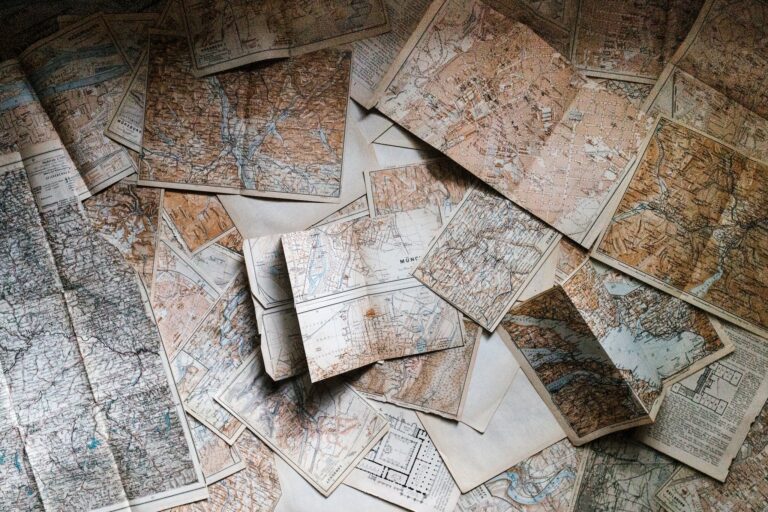
Paper degradation manifests through yellowing, brittleness, and acidic deterioration that weakens the document’s structural integrity. You’ll often encounter foxing – brown spots caused by metal particles and moisture – particularly along map edges and folded areas. Ink fading affects both handwritten annotations and printed text, while water damage creates stains, warping, and potential mold growth. Physical tears range from small edge nicks to major splits across geographical features that require immediate attention.
Documenting Existing Damage Through Photography and Notes
High-resolution photography captures overall condition and specific damage areas using consistent lighting and multiple angles for comprehensive documentation. You should photograph the map under both natural and UV light to reveal hidden damage patterns and previous restoration attempts. Detailed written notes record damage locations using grid references, measure tear lengths, and describe stain characteristics with color specifications. Create a condition report template that includes damage severity ratings, material composition observations, and recommended treatment priorities for systematic restoration planning.
Surface Cleaning Methods for Removing Dirt and Grime
Surface cleaning forms the foundation of professional map restoration, removing accumulated dirt and grime that can obscure cartographic details and accelerate deterioration. You’ll need to select appropriate cleaning methods based on your map’s paper type, ink composition, and damage severity.
Dry Cleaning Techniques Using Soft Brushes and Erasers
[lasso id=”16874″]
Dry cleaning techniques offer the safest initial approach for removing surface dirt from vintage maps without introducing moisture risks. You’ll start with soft natural bristle brushes, working in gentle circular motions to lift loose particles from paper fibers. Art gum erasers and vinyl erasers effectively remove pencil marks and light staining without damaging fragile paper surfaces. Document cleaning pads containing fine rubber particles provide controlled abrasion for stubborn surface deposits. Always test cleaning materials on inconspicuous areas first to ensure compatibility with your map’s inks and paper composition.
Wet Cleaning Approaches for Stubborn Stains and Discoloration
Wet cleaning approaches become necessary when dry methods can’t address deep stains, foxing, or water damage marks on historical maps. You’ll use distilled water applied with cotton swabs or soft sponges to gradually dissolve embedded dirt and discoloration. Diluted conservation-grade detergents help break down oil-based stains and handling residue that penetrate paper fibers. Localized treatments using pH-neutral solutions target specific problem areas without affecting surrounding map sections. Document the cleaning process through photographs and maintain controlled humidity levels to prevent warping or cockling during the wet cleaning phase.
Paper Strengthening Techniques for Fragile Map Substrates
You’ll need specialized strengthening methods when dealing with deteriorated map substrates that can’t support their own weight. These techniques provide structural support while maintaining the map’s original appearance and historical integrity.
Backing Methods Using Japanese Tissue Paper
[lasso id=”16133″]
You’ll achieve optimal results using Japanese kozo tissue paper for backing fragile maps due to its long fibers and conservation-grade properties. Apply wheat starch paste or methylcellulose adhesive to bond the tissue to the map’s verso, creating a supportive layer that doesn’t interfere with cartographic details. Work systematically from the center outward, using a soft brush to eliminate air bubbles and ensure complete adhesion. This method provides excellent tear resistance while allowing the original map colors and text to remain fully visible from the recto side.
Consolidation Treatments for Weakened Paper Fibers
You’ll restore structural integrity to weakened paper fibers using diluted conservation adhesives applied through controlled misting or brush application. Mix methylcellulose or wheat starch paste to 1-2% concentration, then apply sparingly to areas where fiber bonds have deteriorated. Focus on crack lines, fold intersections, and areas showing powdery degradation where paper fibers have separated. Allow complete drying under controlled humidity conditions to prevent cockling, then assess whether additional applications are needed for optimal fiber consolidation and map stability.
Tear Repair Strategies for Damaged Map Sections
Repairing tears in vintage maps requires precision and patience to maintain cartographic integrity. You’ll need specialized materials and techniques to ensure repairs remain invisible while providing long-term structural support.
Mending Small Tears with Archival Repair Tape
[lasso id=”17416″]
Small tears respond best to archival repair tape applied from the verso side of your map. Cut Japanese tissue tape slightly larger than the tear and position it carefully to avoid overlapping printed areas. Apply gentle pressure with a bone folder, working from the center outward to eliminate air bubbles. This method provides immediate stabilization while remaining reversible for future conservation needs.
Reconstructing Missing Portions Through Careful Patching
Missing map sections require custom patches created from period-appropriate paper matched to your original substrate. Tone new paper using diluted watercolors or tea staining to achieve color compatibility before cutting patches with deckled edges. Layer the patch behind the damaged area using wheat starch paste, ensuring proper fiber alignment. Complete the repair by carefully recreating missing cartographic elements using archival inks and period-appropriate cartographic symbols.
Color Restoration Approaches for Faded Map Details
Restoring faded colors in historical maps requires specialized techniques that balance accuracy with preservation. Professional conservators employ both traditional and digital methods to revive cartographic details without compromising the map’s integrity.
Inpainting Techniques Using Reversible Watercolors
[lasso id=”16032″]
Inpainting with reversible watercolors allows you to restore faded map elements while maintaining conservation standards. You’ll use conservation-grade watercolors that can be safely removed without damaging the original substrate. Apply these pigments in thin layers using fine brushes, building color gradually to match surrounding areas. Focus on critical cartographic features like coastlines, political boundaries, and text labels where color loss affects readability. Document each application with photography and maintain detailed treatment records. Test color matches on sample areas before proceeding with visible sections.
Digital Color Matching for Accurate Historical Representation
Digital color matching provides precise color analysis for historically accurate restoration work. You’ll use spectrophotometers to measure original pigment values in unfaded areas, creating color profiles for matching purposes. Software like Adobe Photoshop’s color picker tools help you analyze RGB values from high-resolution photographs of similar contemporary maps. Create digital color swatches that guide your physical pigment mixing, ensuring consistency across multiple restoration sessions. This approach works particularly well when combined with UV photography to reveal hidden color information beneath surface fading.
Deacidification Processes for Long-Term Map Preservation
Deacidification neutralizes acidic compounds that cause paper degradation over time. These chemical treatments extend map lifespan by decades when applied correctly.
Aqueous Deacidification Methods for Water-Safe Maps
Immersion baths using calcium hydroxide solutions effectively neutralize acids in stable maps with water-resistant inks. You’ll submerge the map in pH-controlled alkaline solutions for 15-30 minutes, monitoring temperature and concentration levels throughout treatment. Spray applications offer controlled deacidification for maps requiring minimal moisture exposure, using magnesium bicarbonate solutions applied through fine misting systems. Document pH levels before and after treatment to verify effectiveness.
Non-Aqueous Treatments for Sensitive Ink and Paper Combinations
Vapor-phase treatments utilize alkaline compounds like magnesium oxide in sealed chambers, allowing gaseous alkaline particles to penetrate paper fibers without liquid contact. You’ll monitor humidity levels below 60% during 48-72 hour treatment cycles to prevent ink bleeding. Solvent-based systems employ methylmagnesium carbonate dissolved in organic solvents, providing deacidification for water-sensitive materials including iron gall inks and fugitive dyes. Test compatibility on sample areas before full treatment application.
Proper Storage and Display Solutions After Restoration
Once you’ve completed your map restoration techniques, protecting your investment requires careful attention to environmental conditions and storage materials that’ll preserve your work for decades.
Creating Optimal Environmental Conditions
Temperature control maintains paper stability and prevents accelerated deterioration in restored maps. You’ll need to maintain consistent temperatures between 65-70°F with minimal fluctuations throughout the day. Humidity levels should remain stable at 45-55% relative humidity to prevent expansion and contraction cycles that stress paper fibers.
Air circulation systems help prevent mold growth while filtering out pollutants that can damage your restored cartographic materials. Light exposure requires strict management using UV-filtering glass and limiting illumination to 50 lux maximum during display periods.
Using Archival Materials for Long-Term Protection
Acid-free folders and boxes provide essential barriers against environmental contaminants that threaten restored map longevity. You’ll want to use lignin-free storage materials with alkaline reserves that buffer against future acid formation in your collection.
Polyester film sleeves offer transparent protection while allowing safe handling of frequently accessed maps without direct contact. Interleaving tissue made from buffered paper prevents maps from adhering to each other while providing additional pH protection during storage periods.
Conclusion
Your vintage maps deserve the expert care that these seven restoration techniques provide. By understanding the complexities of paper strengthening color restoration and proper environmental storage you’re better equipped to preserve these historical treasures.
Remember that successful map restoration requires patience precision and often professional expertise. Each technique serves a specific purpose in the restoration process and when combined properly they can extend your map’s lifespan by decades.
Whether you’re dealing with minor surface cleaning or complex tear repairs these methods ensure that future generations can continue to study and appreciate the geographical insights your maps contain. Your commitment to preservation helps maintain these irreplaceable connections to our past.
Frequently Asked Questions
What makes vintage maps so valuable and worth preserving?
Vintage maps are irreplaceable historical artifacts that provide unique insights into past civilizations, geographical understanding, and cultural boundaries. They serve as primary sources for researchers studying territorial changes, trade routes, and ancestral knowledge. Without proper preservation, these valuable documents could be lost forever, along with their historical and geographical significance for future generations.
What are the most common types of damage found in historical maps?
Historical maps typically suffer from paper degradation, foxing (brown spots), ink fading, water damage, and physical tears. These issues develop over time due to exposure to moisture, improper handling, and environmental factors. Understanding these common deterioration patterns helps restoration specialists develop appropriate treatment plans for each unique map.
How do professionals assess map condition before starting restoration?
Map condition assessment involves thorough visual examination, high-resolution photography, and detailed documentation of existing damage. Specialists create comprehensive condition reports that identify areas of concern, prioritize treatment needs, and establish restoration goals. This systematic approach ensures that restoration work doesn’t cause additional harm to the fragile historical document.
What surface cleaning methods are safe for vintage maps?
Professional map restoration begins with dry cleaning techniques using soft brushes and conservation-grade erasers, which are the safest initial approach. For stubborn stains, specialists may use wet cleaning methods with distilled water and conservation-grade detergents. All cleaning materials are tested on inconspicuous areas first to ensure they won’t damage the original document.
How are tears and missing sections repaired in historical maps?
Small tears are mended using archival repair tape applied from the back side to maintain invisibility. Missing portions require custom patches created from period-appropriate paper, with careful attention to color compatibility. Specialists use archival inks to recreate missing cartographic elements, ensuring repairs provide structural support while preserving historical accuracy and authenticity.
What techniques are used to restore faded colors on maps?
Color restoration involves inpainting techniques using reversible watercolors that meet conservation standards. Specialists utilize digital color matching methods with spectrophotometers and specialized software to ensure historical accuracy. UV photography may reveal hidden color information, helping conservators make informed decisions about original color schemes and appropriate restoration approaches.
Why is deacidification important for map preservation?
Deacidification neutralizes acidic compounds in paper that cause deterioration over time, significantly extending a map’s lifespan. The process involves aqueous methods for stable maps or non-aqueous treatments for sensitive materials. Proper pH monitoring ensures the treatment effectively prevents further acid-related damage while maintaining the map’s structural integrity and historical value.
How should restored maps be stored and displayed?
Restored maps require controlled environments with temperatures between 65-70°F and humidity levels at 45-55%. Storage should utilize archival materials like acid-free folders and polyester film sleeves. Light exposure must be carefully managed, and proper air circulation is essential. These conditions protect against environmental contaminants and ensure long-term preservation of restoration work.