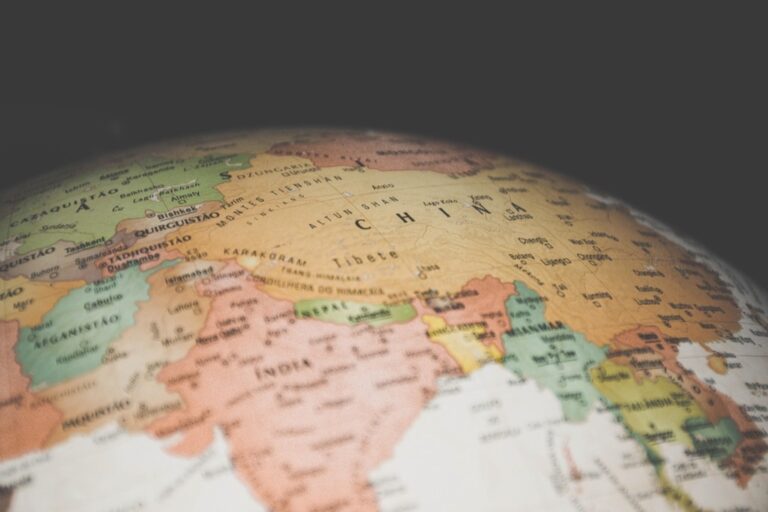
5 Best Digital Map Technologies
Why it matters: You’ve likely seen how ancient map projections still shape today’s GPS navigation and climate modeling, but the evolution runs much deeper than you might expect.
[lasso id=”7376″]
Historical cartographic techniques developed centuries ago continue driving innovation across industries from urban planning to satellite imaging. These time-tested projection methods aren’t museum pieces—they’re actively solving modern spatial challenges with surprising effectiveness.
The transformation reveals how mathematical principles transcend their original purpose to become essential tools for contemporary technology applications.
P.S. check out Udemy’s GIS, Mapping & Remote Sensing courses on sale here…
Disclosure: As an Amazon Associate, this site earns from qualifying purchases. Thank you!
Digital Technology Transforms Traditional Map Projections for Interactive Applications
Modern cartographers now leverage digital platforms to breathe new life into centuries-old projection methods, creating dynamic mapping experiences that adapt in real-time to user needs.
Geographic Information Systems (GIS) Integration
GIS platforms like ArcGIS Pro and QGIS automatically handle projection transformations during data analysis workflows. You’ll find these systems seamlessly convert between Mercator, Lambert Conformal Conic, and Albers Equal Area projections based on your geographic extent and analytical requirements. The software maintains mathematical precision while allowing you to switch projections instantly, enabling spatial analysis across multiple coordinate systems without manual recalculation of geographic coordinates.
Web-Based Mapping Platforms
Web mapping services utilize adaptive projection systems that respond to zoom levels and geographic regions. Platforms like Mapbox GL JS and Leaflet dynamically shift from Web Mercator at global scales to locally optimized projections for regional views. You can implement custom projection parameters through JavaScript APIs, allowing your web applications to display historical maps alongside modern satellite imagery while maintaining spatial accuracy across different cartographic representations.
[lasso id=”16952″]
Virtual Reality and 3D Visualization
VR mapping applications transform flat historical projections into immersive 3D environments using tools like Unity 3D and Unreal Engine. You can experience Ptolemy’s world maps or medieval T-O diagrams as navigable virtual spaces, where traditional projection distortions become interactive learning elements. These platforms convert 2D cartographic data into volumetric representations, allowing users to manipulate viewing angles and understand how historical mapmakers conceptualized geographic relationships through their chosen projection methods.
[lasso id=”6005″]
Urban Planning Leverages Historical Cartographic Methods for Smart City Development
Modern urban planners increasingly rely on time-tested cartographic principles to design efficient, sustainable cities. These historical mapping techniques provide proven frameworks for spatial analysis that complement contemporary smart city technologies.
Infrastructure Design and Management
Coordinate systems from historical surveying enable precise utility network mapping across municipal boundaries. You’ll find that traditional grid-based projections like State Plane Coordinate System maintain centimeter-level accuracy for water, gas, and electrical infrastructure placement. Municipal GIS departments use these established reference frames to overlay smart sensors and IoT devices onto existing utility maps. Historical triangulation methods also inform fiber optic cable routing through urban corridors, ensuring optimal connectivity for smart city networks.
[lasso id=”17345″]
Population Distribution Analysis
Demographic mapping techniques developed in the 19th century provide foundational methods for analyzing modern population density patterns. You can apply historical dot density mapping principles to visualize real-time population flows from mobile device data. Traditional choropleth mapping methods help urban planners identify service gaps by overlaying census boundaries with smart city sensor coverage areas. Population distribution models based on historical cartographic principles guide the placement of electric vehicle charging stations and public Wi-Fi access points.
[lasso id=”16024″]
Transportation Network Optimization
Flow mapping principles from historical traffic studies inform contemporary transportation routing algorithms. You’ll discover that traditional desire line mapping techniques effectively visualize pedestrian and vehicle movement patterns captured by smart traffic sensors. Historical network analysis methods guide the placement of adaptive traffic signals and dynamic route guidance systems. Transit planners use time-distance mapping concepts pioneered in early 20th-century cartography to optimize bus rapid transit corridors and bike-sharing station locations.
[lasso id=”17427″]
Climate Science Utilizes Century-Old Projection Techniques for Environmental Modeling
Modern climate scientists rely heavily on cartographic projections developed in the 19th and early 20th centuries to analyze global environmental patterns. These mathematical frameworks provide the spatial foundation for climate models that predict future environmental conditions.
Weather Pattern Tracking and Prediction
You’ll find that meteorologists use Mercator and stereographic projections originally designed for maritime navigation to track storm systems and atmospheric pressure patterns. The National Weather Service applies these historical projections in their Global Forecast System (GFS) models, which process weather data from over 3,000 stations worldwide. Polar stereographic projections excel at tracking Arctic weather systems, while equirectangular projections help visualize jet stream movements across continental regions.
Climate Change Visualization
You can observe climate scientists utilizing Robinson and Mollweide projections from the 1960s to display global temperature anomalies and sea level changes. NASA’s Goddard Institute for Space Studies employs these equal-area projections to accurately represent warming trends across different latitudes. Temperature data visualization relies on these projections to prevent distortion when showing polar ice melt patterns, ensuring that Arctic and Antarctic changes appear proportionally correct to audiences.
Natural Disaster Risk Assessment
You’ll discover that emergency management agencies apply Albers equal-area conic projections, developed in 1805, to assess earthquake zones and flood risks across large geographic regions. FEMA’s flood insurance rate maps utilize these century-old mathematical principles to calculate precise risk zones for coastal areas. Seismic hazard mapping depends on these projections to accurately model fault line distributions and tsunami wave propagation patterns along continental coastlines.
Educational Technology Modernizes Historical Projections for Enhanced Learning Experiences
Modern educators are transforming centuries-old mapping techniques into dynamic digital learning tools that make complex geographic concepts accessible to students worldwide.
Interactive Classroom Tools
Smart boards and projection systems bring historical map projections to life through real-time manipulation exercises. You can demonstrate Mercator distortion by stretching Greenland’s size while students watch, or show how Peters projection corrects area relationships through interactive overlays. Geographic visualization software like Google Earth Education allows you to layer multiple projection types simultaneously, helping students understand why early cartographers chose specific mathematical approaches for different regions and purposes.
Online Geography Courses
Massive Open Online Courses (MOOCs) integrate historical projection theory with hands-on digital mapping exercises through platforms like Coursera and edX. You’ll find specialized courses combining 18th-century surveying methods with modern GIS applications, where students create their own projections using tools like QGIS. Virtual field trips utilize 360-degree mapping technology to explore how historical projections influenced colonial navigation routes, trade networks, and territorial boundaries across different continents.
Mobile Learning Applications
Augmented reality apps overlay historical map projections onto real-world environments, letting you compare how 16th-century navigators viewed coastlines versus satellite imagery accuracy. GPS-enabled learning platforms like FieldScope and ArcGIS Explorer allow students to collect location data and apply different projection formulas to understand coordinate transformation principles. Gamified mapping apps challenge users to navigate using only historical projection methods, reinforcing mathematical concepts through interactive problem-solving scenarios.
Navigation Systems Incorporate Traditional Projection Principles with Satellite Technology
Modern satellite navigation systems seamlessly blend centuries-old cartographic projection methods with cutting-edge GPS technology. Your smartphone‘s mapping applications rely on the same mathematical foundations that 18th-century surveyors used to create accurate territorial maps.
GPS Coordinate Systems
GPS receivers utilize the World Geodetic System 1984 (WGS84) datum, which incorporates Mercator projection principles for real-time positioning calculations. Your navigation device converts satellite signals into Universal Transverse Mercator (UTM) coordinates, maintaining the angular accuracy that historical cartographers established through triangulation surveys. Popular GPS units like Garmin eTrex and smartphone apps automatically transform these coordinates into user-friendly formats while preserving the mathematical precision of traditional projection formulas.
Marine and Aviation Navigation
Maritime and aviation systems depend on stereographic and Lambert conformal conic projections for accurate course plotting across vast distances. Commercial airlines use Flight Management Systems that apply these historical projection methods to optimize fuel consumption and flight paths. Marine GPS chartplotters, including models from Raymarine and Humminbird, employ Mercator projections for coastal navigation while switching to gnomonic projections for great circle route calculations during ocean crossings.
Location-Based Services
Mobile applications integrate historical projection algorithms with modern geofencing technology to deliver precise location-based notifications and services. Ride-sharing apps like Uber and Lyft use transverse Mercator projections to calculate accurate pickup distances in urban environments. Food delivery platforms apply these same cartographic principles to optimize driver routes, while augmented reality applications overlay digital information onto real-world locations using coordinate transformations derived from 19th-century surveying techniques.
Conclusion
Historical map projections aren’t museum pieces – they’re living tools that continue to shape your digital world. From the GPS in your car to the weather app on your phone these centuries-old mathematical principles work behind the scenes to deliver accurate spatial information.
You’ll find these projection techniques powering everything from urban planning software to climate models. Their enduring value lies in their mathematical precision and proven reliability across diverse applications.
As technology advances these historical foundations remain essential. They provide the mathematical backbone that enables modern innovations in mapping navigation and spatial analysis to function effectively in your daily life.
Frequently Asked Questions
How do ancient map projections influence modern GPS technology?
GPS systems utilize traditional projection principles, particularly the World Geodetic System 1984 (WGS84) datum, which incorporates Mercator projection techniques. Navigation devices convert satellite signals into Universal Transverse Mercator (UTM) coordinates, maintaining the angular accuracy established by historical cartographers. This ensures precise real-time positioning calculations in modern navigation systems.
What role do historical projections play in climate science today?
Climate scientists rely on 19th and early 20th-century projections like Mercator and stereographic for tracking storm systems. The National Weather Service uses these in Global Forecast System models, while Robinson and Mollweide projections help visualize temperature anomalies and sea level changes. Emergency agencies also use Albers equal-area conic projections for disaster risk assessments.
How are map projections being used in modern urban planning?
Urban planners use historical cartographic principles alongside smart city technologies for spatial analysis. They apply coordinate systems from historical surveying for utility network mapping, utilize 19th-century demographic techniques for population density analysis, and employ historical flow mapping principles for transportation optimization and infrastructure placement.
What digital tools are transforming traditional map projections?
Geographic Information Systems (GIS) like ArcGIS Pro and QGIS enable automatic projection transformations during data analysis. Web-based services like Mapbox GL JS and Leaflet use adaptive projection systems that adjust based on zoom levels. Virtual reality tools bring historical projections to life through immersive 3D visualization experiences.
How do educators use historical mapping techniques in modern classrooms?
Modern educators integrate historical projections with digital learning tools like smart boards and Google Earth Education for real-time manipulation. Online courses combine projection theory with hands-on exercises, while mobile apps use augmented reality to overlay historical projections onto real-world environments, making geographic concepts more accessible and engaging.
Which map projections are most commonly used in satellite navigation?
Maritime and aviation systems rely heavily on stereographic and Lambert conformal conic projections for accurate course plotting. Mobile applications for ride-sharing and food delivery integrate historical projection algorithms for location-based services. These traditional projection methods ensure accuracy in modern satellite-based navigation systems across various industries.