5 Ways GIS is Used for Historical Analysis That Reveal Hidden Patterns
The big picture: You can now map centuries of human history with unprecedented precision thanks to Geographic Information Systems (GIS) technology that’s revolutionizing how historians analyze the past.
Why it matters: GIS transforms dusty archives and scattered historical records into dynamic visual stories that reveal patterns invisible to traditional research methods. You’re witnessing a fundamental shift where historians combine cutting-edge mapping technology with archaeological findings and historical documents to uncover new insights about civilizations.
What’s happening: Modern researchers are using GIS to track everything from ancient trade routes to disease outbreaks throughout history. This powerful combination of geography and historical data is helping you understand how location influenced major historical events and societal changes across different time periods.
Disclosure: As an Amazon Associate, this site earns from qualifying purchases. Thank you!
P.S. check out Udemy’s GIS, Mapping & Remote Sensing courses on sale here…
Mapping Historical Settlement Patterns and Urban Development
You can trace the evolution of human habitation through GIS technology by layering historical maps with modern spatial analysis. This approach reveals how cities expanded and populations shifted across different time periods.
Tracking Population Growth Over Time
You’ll discover demographic changes by overlaying census data from multiple decades onto digital maps. GIS software like ArcGIS Pro allows you to create animated visualizations showing population density shifts from 1800 to present day. You can identify growth corridors by analyzing dot density maps that represent household counts per square mile. Historical tax records and voting registers provide additional population indicators when overlaid with property boundaries and street networks.
Analyzing Infrastructure Expansion
You can map the chronological development of roads, railways, and utilities by digitizing historical engineering drawings and city planning documents. Transportation networks reveal settlement priorities – areas with early railroad access often show accelerated development patterns. You’ll trace water system expansion by georeferencing historical utility maps and comparing them with modern infrastructure layers. This analysis helps identify which neighborhoods received services first and how infrastructure influenced residential growth patterns.
Identifying Settlement Distribution Factors
You’ll uncover the geographic forces that shaped historical communities by analyzing elevation models, watershed boundaries, and natural resource locations. Proximity analysis tools reveal how settlements clustered around water sources, fertile soils, and transportation routes. You can measure distances between historical settlements and geographic features like rivers or mountain passes to understand site selection patterns. Trade route analysis shows how commercial corridors influenced where people chose to establish permanent communities across different historical periods.
Reconstructing Ancient Trade Routes and Economic Networks
GIS technology transforms how you study historical commerce by revealing the geographic foundations of ancient economic systems. You can map trade relationships that connected civilizations across continents and analyze the economic forces that shaped historical development.
[lasso id=”16024″]
Visualizing Commercial Pathways
Map ancient trade routes by overlaying archaeological site data with topographic models to identify natural corridors used by merchants. You’ll trace how traders navigated mountain passes, river systems, and desert routes by analyzing least-cost path algorithms that consider terrain difficulty, water availability, and seasonal weather patterns. Digital elevation models reveal why certain pathways became major commercial arteries while others remained local routes.
Analyzing Economic Relationships Between Regions
Examine trade networks using network analysis tools that measure connectivity between archaeological sites containing similar artifacts or materials. You can quantify economic relationships by analyzing the distribution of imported goods like pottery, metals, or precious stones across different regions. Spatial clustering analysis identifies trading partners and reveals how distance affected commercial relationships in pre-industrial economies.
Understanding Resource Distribution Impact
Assess resource availability by mapping mineral deposits, agricultural zones, and raw material sources against known settlement locations and trade route segments. You’ll discover how natural resource distribution influenced trade patterns by overlaying geological surveys with archaeological evidence of specialized production centers. Proximity analysis reveals which communities controlled valuable resources and how scarcity drove long-distance commerce.
Analyzing Battlefield Locations and Military Campaign Strategies
GIS technology revolutionizes military history research by providing unprecedented spatial analysis capabilities for understanding warfare patterns. You can now examine centuries of military campaigns through detailed geographic models that reveal strategic decision-making processes.
Mapping Troop Movements and Strategic Positions
Visualizing unit positions becomes remarkably precise when you overlay historical military records onto digital elevation models. You’ll discover movement patterns by digitizing regimental logs and plotting coordinates from battlefield sketches. Modern historians use ArcGIS to create animated sequences showing troop deployments across multiple days, revealing tactical formations and command decisions. Time-series mapping allows you to trace how armies maneuvered around obstacles like rivers and hills, demonstrating how terrain channeled military movements into predictable corridors.
Studying Terrain Influence on Battle Outcomes
Elevation analysis reveals how topography determined engagement outcomes across major historical conflicts. You can calculate line-of-sight visibility from commanding heights and identify natural choke points that influenced tactical decisions. Slope calculations help you understand cavalry effectiveness and artillery placement advantages. Watershed mapping shows how water features created defensive barriers or supply line vulnerabilities. Researchers combine soil composition data with precipitation records to determine how weather conditions affected battlefield mobility and equipment performance.
[lasso id=”16210″]
Examining Fortification Placement Patterns
Defensive positioning analysis demonstrates systematic approaches to military engineering across different historical periods. You’ll identify optimal sight lines and fields of fire by analyzing fort locations relative to surrounding terrain features. Proximity studies reveal how fortifications protected trade routes, river crossings, and strategic mountain passes. Buffer zone analysis shows defensive perimeters and early warning systems. Modern GIS tools help you quantify the relationship between fortification density and regional population centers, revealing how military planners balanced resource allocation with territorial defense requirements.
Studying Environmental Changes and Their Historical Impact
Environmental data layered with historical records reveals how climate and landscape changes shaped human civilizations. You can track centuries of environmental shifts to understand their profound influence on historical events.
Tracking Climate Variations Over Centuries
Climate reconstruction models help you visualize temperature and precipitation patterns across different time periods. You’ll overlay paleoclimate data with historical records to identify correlations between weather events and societal changes. Tree ring data, ice core samples, and historical weather observations create comprehensive climate maps. These visualizations reveal how droughts influenced migration patterns, crop failures triggered famines, and severe winters affected military campaigns throughout history.
Analyzing Landscape Transformation Effects
Landscape evolution analysis shows you how natural and human-induced changes altered historical environments. You can compare historical maps with modern satellite imagery to track deforestation, wetland drainage, and coastline changes. Digital elevation models reveal how river courses shifted over time, affecting settlement locations and trade routes. These transformations explain why certain historical sites were abandoned, how agricultural practices evolved, and why some regions experienced population booms or declines.
Correlating Environmental Events With Historical Records
Event correlation mapping connects specific environmental occurrences with documented historical impacts. You’ll plot volcanic eruptions, earthquakes, floods, and storms against population records, economic data, and political events. This analysis reveals how the 1815 Mount Tambora eruption caused global crop failures, or how the Medieval Warm Period enabled Viking expansion. Archaeological evidence combined with environmental data helps you understand civilization collapses, migration waves, and technological adaptations to environmental pressures.
Preserving and Digitizing Archaeological Site Data
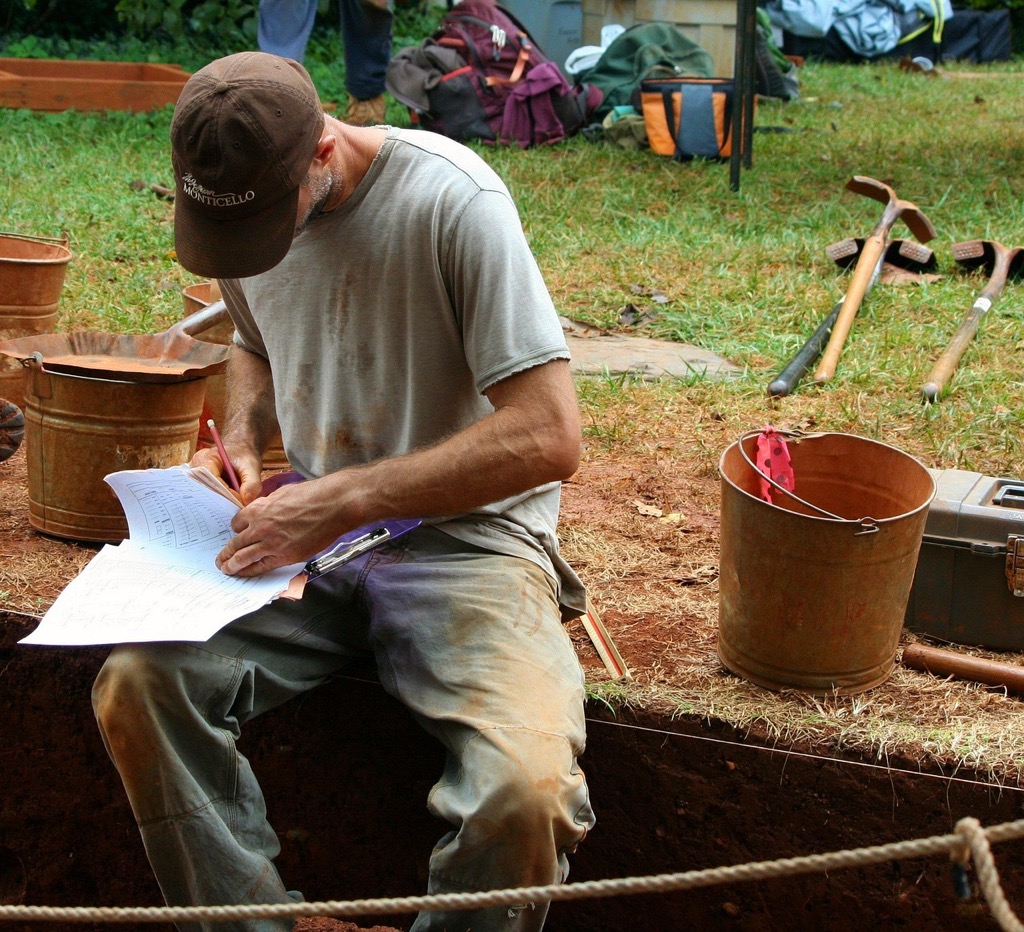
GIS technology transforms archaeological research by creating permanent digital records of excavation sites and cultural heritage locations. You’ll find that digitizing archaeological data prevents information loss while enabling sophisticated spatial analysis of historical findings.
Creating Digital Heritage Maps
Digital heritage maps integrate archaeological site locations with historical landscape data to create comprehensive visual records. You can overlay excavation boundaries onto satellite imagery and topographic maps to document spatial relationships between artifacts and terrain features. Modern GIS platforms like ArcGIS Pro allow you to incorporate 3D terrain models with archaeological layers, creating interactive maps that preserve site context for future researchers. These digital maps become permanent archives that protect archaeological knowledge from physical deterioration and loss.
[lasso id=”7174″]
Documenting Artifact Distribution Patterns
Artifact distribution mapping reveals spatial relationships between historical objects and their discovery locations within archaeological sites. You’ll plot individual artifact coordinates using GPS data to create detailed scatter plots that show clustering patterns and material culture zones. Database integration allows you to link artifact attributes like material type, cultural period, and condition to their precise geographic locations. This spatial documentation helps identify activity areas, trade relationships, and cultural practices by analyzing how different artifact types distribute across excavation sites.
Building Comprehensive Historical Databases
Historical databases combine archaeological records with geographic coordinates to create searchable repositories of cultural heritage information. You can structure these databases to include site descriptions, artifact catalogs, dating information, and photographic documentation linked to specific map locations. Standardized data fields ensure consistency across multiple excavation projects while enabling complex queries that reveal patterns across different sites and time periods. These databases support long-term research by preserving detailed records that future archaeologists can access and analyze decades after initial excavations conclude.
Conclusion
GIS technology has revolutionized how you approach historical research by transforming static data into dynamic visual stories. You’re no longer limited to text-based analysis when exploring the past – instead you can uncover spatial relationships that were previously invisible.
The applications we’ve explored demonstrate that geography isn’t just background context in history – it’s a driving force that shaped human decisions and outcomes. Whether you’re tracking ancient trade networks or analyzing military campaigns your research gains new depth through spatial analysis.
As digital archives continue expanding you’ll find even more opportunities to apply GIS methods to historical questions. The intersection of technology and history offers endless possibilities for discovering patterns and connections that traditional research methods might miss.
Frequently Asked Questions
What is GIS technology and how does it apply to historical research?
Geographic Information Systems (GIS) is a technology that analyzes and visualizes spatial data on digital maps. In historical research, GIS transforms traditional archives into engaging visual narratives by overlaying historical data onto geographic maps. This allows researchers to reveal hidden patterns, analyze settlement development, trace trade routes, and understand how geographical factors influenced historical events and societal changes throughout different time periods.
How does GIS help map historical settlement patterns and urban development?
GIS maps historical settlement patterns by overlaying census data onto digital maps, showing how cities expanded and populations shifted over time. Researchers can identify growth corridors, analyze demographic changes, and trace infrastructure development like roads and railways. The technology also uses elevation models and watershed boundaries to understand why communities settled in specific locations based on geographic factors like water sources and fertile soils.
What role does GIS play in reconstructing ancient trade routes?
GIS reconstructs ancient trade routes by overlaying archaeological site data with topographic models, allowing researchers to trace how traders navigated different terrains. The technology maps commercial pathways connecting civilizations across continents, analyzes economic relationships through network analysis tools, and quantifies trade networks based on artifact distribution. It also assesses how resource distribution influenced trade patterns by mapping mineral deposits against settlement locations.
How is GIS used in military history research?
GIS revolutionizes military history research by providing spatial analysis capabilities for understanding warfare patterns. Historians use digital elevation models to visualize troop positions, create animated sequences of military movements, and analyze how terrain influenced battle outcomes. The technology also examines fortification placement patterns, revealing systematic military engineering approaches and showing how defensive positions were strategically located relative to terrain features and trade routes.
Can GIS track environmental changes and their historical impact?
Yes, GIS tracks environmental changes by creating climate reconstruction models that visualize temperature and precipitation patterns over time. These models correlate environmental data with historical events, showing how droughts, floods, and climate shifts influenced migration patterns and military campaigns. The technology also analyzes landscape transformations like deforestation and river course changes, explaining shifts in settlement locations and trade routes throughout history.
How does GIS help preserve archaeological site data?
GIS preserves archaeological data by creating permanent digital records that prevent information loss and enable sophisticated spatial analysis. It develops digital heritage maps integrating archaeological sites with historical landscape data, documents spatial relationships between artifacts and terrain features, and creates comprehensive databases combining archaeological records with geographic coordinates. This ensures long-term research support and preserves detailed records for future archaeologists and historians.