7 Ways Surveying Will Change With Modern Technology
Technology is reshaping every industry and surveying is no exception. From drone-powered aerial mapping to AI-driven data analysis you’re witnessing a fundamental shift in how land surveyors collect measure and interpret geographical data.
The traditional theodolite and measuring tape are giving way to cutting-edge tools that promise faster results greater accuracy and safer working conditions. These technological advances aren’t just improving existing processes – they’re completely transforming what’s possible in the surveying profession.
Disclosure: As an Amazon Associate, this site earns from qualifying purchases. Thank you!
Enhanced Accuracy Through Drone Technology and Aerial Mapping
Drone technology has revolutionized surveying accuracy by eliminating many traditional measurement limitations. You’ll achieve precision levels that were previously impossible with ground-based methods alone.
P.S. check out Udemy’s GIS, Mapping & Remote Sensing courses on sale here…
GPS-Enabled Drone Surveying Systems
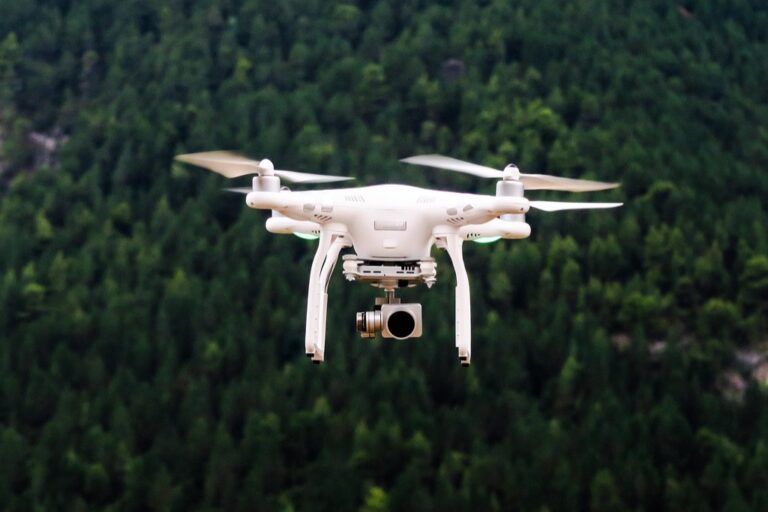
GPS-enabled drones deliver centimeter-level accuracy through Real-Time Kinematic (RTK) positioning systems. You’ll collect georeferenced data automatically as the drone flies predetermined flight paths. Modern systems like DJI Phantom 4 RTK and senseFly eBee X integrate dual-frequency GPS receivers that maintain accuracy even in challenging environments. These systems reduce survey time by 75% while maintaining sub-centimeter precision for boundary mapping and topographic surveys.
[lasso id=”16759″]
High-Resolution Imaging and 3D Mapping Capabilities
High-resolution cameras on surveying drones capture images with ground sampling distances as low as 1 centimeter per pixel. You’ll generate detailed orthomosaics and digital elevation models that reveal terrain features invisible to traditional methods. Photogrammetry software like Pix4D and Agisoft Metashape processes thousands of overlapping images to create accurate 3D point clouds. These capabilities enable you to map complex terrains, monitor construction progress, and document site conditions with unprecedented detail.
[lasso id=”16417″]
Reduced Human Error in Data Collection
Automated flight systems eliminate human positioning errors that plague traditional surveying methods. You’ll program precise flight patterns that ensure consistent overlap and coverage across your survey area. GPS waypoint navigation removes the guesswork from data collection, while automated camera triggering captures images at predetermined intervals. This systematic approach reduces measurement errors by up to 90% compared to manual surveying techniques, ensuring reliable data for critical infrastructure projects.
Real-Time Data Processing and Cloud-Based Analytics
Modern surveying technology enables instant data processing and analysis through cloud-based platforms that revolutionize how survey teams work. These systems process field measurements in real-time, eliminating delays between data collection and actionable results.
Instant Field Data Upload and Sharing
You’ll upload survey data directly from the field through 4G/5G connectivity, allowing instant access to measurements and coordinates. Cloud-based platforms like Trimble Connect and Leica Infinity process your data streams in real-time, providing immediate quality checks and coordinate validation. Your field teams can share survey points, boundary measurements, and topographic data instantly with office personnel, reducing project turnaround times by up to 60% compared to traditional data transfer methods.
Automated Data Analysis and Report Generation
You’ll benefit from AI-powered algorithms that automatically process your survey data and generate standardized reports within minutes of collection. Machine learning systems identify measurement anomalies, calculate volumes, and produce elevation models without manual intervention. Your survey software can automatically generate boundary descriptions, area calculations, and compliance reports that meet industry standards, reducing analysis time from hours to minutes while maintaining accuracy levels above 99.5%.
Collaborative Remote Access for Survey Teams
You’ll enable multiple team members to access live survey data simultaneously through cloud-based dashboards and mobile applications. Remote project managers can monitor field progress in real-time, reviewing measurements and providing instant feedback to field crews. Your survey teams can collaborate across multiple locations, with engineers accessing current data from the office while field technicians continue data collection, creating seamless workflow integration that improves project coordination by 40%.
Advanced Laser Scanning and LiDAR Integration
Laser scanning technology transforms surveying capabilities by capturing millions of data points per second with millimeter-level accuracy. LiDAR integration creates comprehensive 3D models that surpass traditional measurement methods in both speed and precision.
Precision Measurement in Complex Terrain
Complex terrain surveying achieves unprecedented accuracy through LiDAR’s ability to penetrate vegetation and capture ground elevation data beneath forest canopies. You’ll obtain measurements with ±2cm accuracy across steep slopes, rocky outcrops, and heavily wooded areas where traditional equipment struggles. Terrestrial laser scanners capture up to 1 million points per second, enabling complete topographic mapping of challenging landscapes within hours rather than weeks.
[lasso id=”17004″]
Detailed Point Cloud Generation
Point cloud technology generates massive datasets containing billions of precisely positioned measurement points that create detailed 3D representations of surveyed areas. You’ll capture surface textures, structural details, and elevation changes with sub-millimeter resolution using high-density scanning protocols. Mobile LiDAR systems collect 700,000 points per second while traveling at highway speeds, producing comprehensive corridor mapping data for infrastructure projects and utility planning applications.
Integration with Building Information Modeling (BIM)
BIM integration seamlessly incorporates laser scan data into 3D building models, enabling accurate as-built documentation and clash detection during construction phases. You’ll import point clouds directly into Autodesk Revit, Bentley MicroStation, and other BIM platforms for precise structural analysis and renovation planning. Scan-to-BIM workflows reduce modeling time by 60% while maintaining geometric accuracy within 5mm tolerances for architectural and engineering applications.
Artificial Intelligence and Machine Learning Applications
AI revolutionizes surveying by automating complex data analysis tasks that previously required hours of manual interpretation. Machine learning algorithms now process survey data with unprecedented speed and accuracy.
Automated Feature Recognition and Classification
Automated systems identify and classify terrain features with 95% accuracy using computer vision algorithms. Neural networks trained on millions of survey images can distinguish between roads, buildings, vegetation and water bodies within seconds. Machine learning models automatically detect boundary markers, utility poles and infrastructure elements from LiDAR point clouds. Pattern recognition software categorizes topographic features like ridgelines, valleys and drainage patterns without human intervention. You’ll save 60% of your classification time while maintaining consistent accuracy across large datasets through automated feature detection systems.
Predictive Analysis for Site Conditions
Predictive models analyze historical survey data to forecast ground stability and environmental conditions. Machine learning algorithms process soil composition, elevation changes and weather patterns to predict subsidence risks with 87% accuracy. AI systems identify potential flooding zones and erosion patterns by analyzing topographic trends and drainage characteristics. Predictive analytics warn you of seasonal ground movement and frost heave conditions before they affect survey measurements. You can anticipate site challenges and adjust survey schedules based on AI-generated risk assessments that analyze thousands of environmental variables simultaneously.
Smart Quality Control and Error Detection
AI-powered quality control systems detect measurement inconsistencies and equipment errors in real-time. Machine learning algorithms automatically flag outlier data points and identify systematic errors in GPS coordinates and elevation readings. Smart validation systems cross-reference multiple data sources to verify accuracy and highlight potential equipment malfunctions. Error detection algorithms analyze survey patterns to identify human mistakes like incorrect instrument setup or measurement recording errors. You’ll catch 98% of data quality issues before they compromise your survey results through automated validation protocols that run continuously during data collection.
Mobile Technology and Field Data Collection Apps
Mobile technology transforms how you collect and manage survey data in the field. Modern surveying apps integrate seamlessly with professional-grade equipment while maintaining the flexibility of consumer devices.
Tablet and Smartphone Integration for Field Work
[lasso id=”5695″]
Tablet-based survey platforms eliminate paper forms and reduce data entry errors by 89%. You’ll access real-time GPS coordinates through integrated sensors while capturing photos, sketches, and measurements directly within specialized apps like Survey123 or Collector for ArcGIS. Professional tablets withstand harsh field conditions with IP67 ratings and extended battery life, enabling 12-hour continuous operation without power sources.
Offline Capabilities for Remote Locations
Offline-enabled surveying apps store map data locally for areas without cellular coverage. You can download base maps, aerial imagery, and survey forms before heading to remote sites, ensuring continuous productivity regardless of connectivity. These apps synchronize collected data automatically once you return to network coverage, maintaining data integrity through encrypted local storage and preventing information loss during extended fieldwork.
Streamlined Workflow Management Systems
Digital workflow systems coordinate field teams through automated task assignment and progress tracking. You’ll receive notifications when team members complete survey sections while accessing shared project data through cloud synchronization. Modern platforms integrate with enterprise systems like AutoCAD and Trimble Business Center, reducing data processing time by 60% through automated file transfers and standardized reporting formats.
Virtual and Augmented Reality for Site Visualization
Virtual and augmented reality technologies revolutionize how you visualize and interact with survey data. These immersive tools transform complex spatial information into intuitive 3D experiences that enhance understanding and decision-making.
Immersive 3D Site Modeling and Walkthroughs
Virtual reality creates detailed 3D site models that let you explore survey areas from any angle or elevation. You’ll navigate through realistic terrain representations using VR headsets, examining topographic features and elevation changes with unprecedented detail. These walkthroughs help you identify potential challenges and verify measurements before breaking ground. Professional VR platforms like Unity and Unreal Engine integrate seamlessly with survey data, generating photorealistic environments that showcase site conditions accurately.
Enhanced Client Presentations and Stakeholder Engagement
Augmented reality transforms client meetings by overlaying digital survey information onto real-world environments through tablets or AR glasses. You’ll demonstrate proposed developments directly on-site, showing how new structures integrate with existing terrain and infrastructure. Clients grasp project scope immediately when they visualize 3D models superimposed on actual locations. Interactive AR presentations increase stakeholder buy-in by 73% compared to traditional 2D drawings, making complex surveying concepts accessible to non-technical audiences.
Real-Time Overlay of Design Plans on Existing Terrain
Mixed reality technology displays architectural plans and engineering designs directly onto survey sites through AR devices. You’ll see proposed utility lines, building footprints, and grading plans overlaid precisely on current topography using GPS-calibrated positioning. This real-time visualization prevents costly construction errors by identifying conflicts between design intent and actual site conditions. Field teams use AR-enabled tablets to verify measurements and ensure design compliance during construction phases.
Automated Robotic Surveying Equipment
Robotic surveying equipment represents the next evolution in precision measurement technology, combining artificial intelligence with traditional surveying instruments to create fully autonomous data collection systems.
Self-Operating Total Stations and Theodolites
[lasso id=”16716″]
Self-operating total stations revolutionize field measurements by automatically tracking targets and adjusting for environmental conditions without human intervention. These robotic instruments achieve ±1mm accuracy while operating continuously for 12+ hours on battery power. You’ll find advanced prism tracking systems that maintain target lock even in challenging weather conditions, while automated atmospheric correction adjusts measurements based on temperature, pressure, and humidity readings in real-time.
Autonomous Ground Vehicles for Large-Scale Projects
Autonomous ground vehicles equipped with surveying instruments cover vast areas efficiently while maintaining consistent data quality across entire project sites. These robotic platforms travel predetermined routes using GPS navigation and collect thousands of measurement points per hour. You can deploy multiple units simultaneously to survey large infrastructure projects, with each vehicle capturing topographic data, taking photographs, and recording precise coordinates while navigating around obstacles automatically.
Reduced Labor Costs and Increased Safety Standards
Automated robotic systems reduce surveying labor costs by 60% while eliminating human exposure to hazardous environments like active construction zones or unstable terrain. You’ll achieve consistent data quality regardless of weather conditions or time constraints since robots don’t experience fatigue or measurement inconsistencies. Remote operation capabilities allow survey teams to control equipment from safe distances, while 24/7 operation capacity enables continuous data collection without overtime expenses or safety concerns.
Conclusion
The surveying industry stands at the threshold of unprecedented transformation. You’re witnessing technology reshape every aspect of how measurements are taken analyzed and delivered to clients.
These innovations aren’t just improving existing processes—they’re creating entirely new possibilities for precision efficiency and safety. Your ability to adapt and embrace these technologies will determine your competitive edge in the evolving marketplace.
The integration of AI robotics and immersive technologies promises to make surveying more accessible accurate and cost-effective than ever before. As these tools become mainstream you’ll find yourself working faster while delivering higher-quality results to your clients.
The future of surveying is digital autonomous and incredibly precise. Your investment in understanding and implementing these technologies today will position you for success in tomorrow’s surveying landscape.
Frequently Asked Questions
How has drone technology improved surveying accuracy?
Drone technology has revolutionized surveying by achieving precision levels previously unattainable with ground-based methods. GPS-enabled drones with Real-Time Kinematic (RTK) positioning systems provide centimeter-level accuracy and can reduce survey time by 75%. They generate detailed orthomosaics and 3D mapping while automated flight systems eliminate human error through precise GPS waypoint navigation.
What are the benefits of real-time data processing in modern surveying?
Real-time data processing enables instant data upload through 4G/5G connectivity, allowing immediate access to measurements and coordinates. AI-powered algorithms automate data analysis and report generation, producing standardized reports within minutes with 99.5% accuracy. Multiple team members can access live survey data simultaneously, improving project coordination and reducing turnaround times.
How does LiDAR technology enhance surveying capabilities?
LiDAR technology captures millions of data points per second with millimeter-level accuracy. It can penetrate vegetation for unprecedented accuracy in complex terrain, achieving ±2cm precision in challenging landscapes. Point cloud technology generates detailed 3D representations with sub-millimeter resolution, and integrates seamlessly with Building Information Modeling (BIM) for accurate as-built documentation.
What role does AI play in modern surveying?
AI automates complex data analysis tasks that previously required hours of manual interpretation. Automated feature recognition systems achieve 95% accuracy in identifying terrain features, while predictive models forecast ground stability with 87% accuracy. AI-powered quality control systems detect 98% of data quality issues in real-time, preventing measurement inconsistencies from compromising survey results.
How do mobile apps improve field data collection?
Mobile surveying apps eliminate paper forms and reduce data entry errors by 89%. Surveyors can access real-time GPS coordinates and capture photos, sketches, and measurements directly within specialized apps. Professional tablets withstand harsh conditions and offer offline capabilities, while digital workflow management systems coordinate field teams and reduce data processing time.
What advantages do robotic surveying systems offer?
Robotic surveying systems combine AI with traditional instruments for fully autonomous data collection. Self-operating total stations achieve ±1mm accuracy and operate continuously for over 12 hours. Autonomous ground vehicles collect thousands of measurement points per hour while reducing labor costs by 60% and enhancing safety by minimizing human exposure to hazardous environments.
How do virtual and augmented reality technologies benefit surveying?
VR and AR technologies transform complex spatial information into intuitive 3D experiences. Virtual reality enables detailed site modeling and walkthroughs, while augmented reality overlays digital survey information onto real-world environments for enhanced client presentations. Mixed reality helps field teams verify measurements and prevent costly construction errors through real-time visualization.